
Key Takeaways
- All 11 juvenile inmates at the Senior Correctional Centre passed the 2026 Basic Education Certificate Examination.
- Each candidate met the criteria for admission to Ghana’s free Senior High School programme.
- The outcome underscores the impact of structured education within correctional settings.
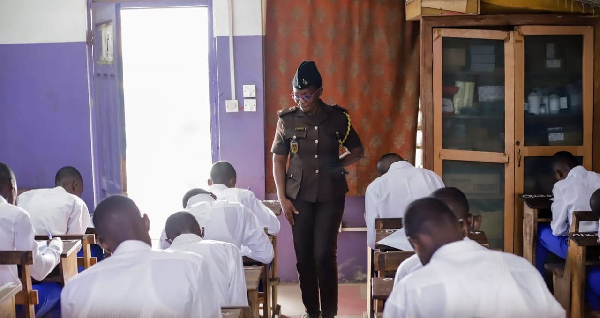
The Senior Correctional Centre (SCC) in Accra reported a flawless performance by its juvenile population in the 2026 BECE. Eleven young detainees achieved scores that satisfy the national threshold for progression to senior high school.
Education officials praised the result as evidence that learning can thrive under custodial conditions, reinforcing the government’s commitment to inclusive education policies.
Background & Context
Ghana’s free Senior High School (SHS) policy, launched in 2017, aims to remove tuition fees for all eligible students in public schools. The programme targets both high‑performing and economically disadvantaged youths, expanding the pool of secondary‑school entrants nationwide.
Juvenile correctional facilities have historically offered limited formal schooling, often restricted to basic literacy. Recent reforms, driven by the Ministry of Education and the Ghana Prison Service, introduced accredited curricula aligned with national examinations.
Program Implementation and Results
The SCC’s education unit partnered with the Free SHS Secretariat to deliver a structured BECE preparation course. Qualified teachers conducted daily lessons covering mathematics, science, English, and social studies, mirroring the standards of mainstream schools.
Assessment data showed steady improvement across the cohort, culminating in the 2026 examination where every candidate secured a passing grade. Sena Okity‑Duah, Coordinator of the Free SHS Secretariat, highlighted the achievement as a model for restorative justice.
Beyond academic scores, the programme emphasized life‑skills training, counseling, and reintegration planning, aligning educational outcomes with reduced recidivism goals.
Broader Implications for Juvenile Justice
The SCC success challenges prevailing assumptions about the capacity of correctional environments to deliver quality education. It suggests that investment in teacher resources and curriculum alignment can produce measurable academic gains even in constrained settings.
Policy analysts note that replicating this model across Ghana’s juvenile facilities could create a pipeline of educated youth ready to reenter society with enhanced employment prospects.
Looking Ahead
The Ministry of Education plans to expand the BECE support framework to additional correctional centres, integrating digital learning tools where feasible. Monitoring mechanisms will track academic performance and post‑release outcomes to gauge long‑term impact.
Continued collaboration between education authorities and the justice system is expected to solidify the role of schooling as a cornerstone of rehabilitation for young offenders.




0 Comments
Leave a Comment
No comments yet. Be the first to share your thoughts!