
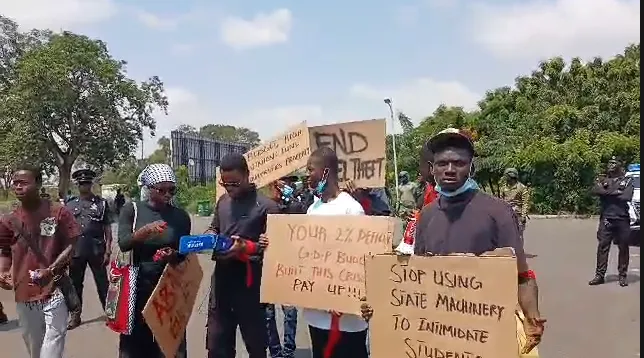
On November 9, 2026, students of the University of Ghana took to the streets in Legon to protest a proposed increase in hostel accommodation charges. The university’s commercial arm, University of Ghana Enterprises Limited (UGEL), initially announced a 26 percent hike, later revising it to a range of 15 to 19 percent after stakeholder engagement. Students rejected the revised 15 percent increase for standard four‑in‑a‑room halls and called for the abolition of the UGEL hostel management framework, greater transparency in fee setting, and the removal of its management.
The Economic Fighters League (EFL) issued a statement through its Students Command, commending the Concerned Students of the University of Ghana and allied groups for the demonstration. The EFL described the protest as part of a broader struggle to protect academic freedom and the right of students to organise, assemble and influence university policy.
EFL criticism of student bodies
The league criticised the University of Ghana Students’ Representative Council (UGSRC) and the Graduate Students Association of Ghana (GRASAG‑UG) for distancing themselves from the march, citing registration status and warnings under the Public Order Act. While the bodies acknowledged the financial burden of accommodation costs, the EFL argued that student leadership must move beyond sympathy and actively defend constituents’ rights.
"A university should cultivate independent thinkers, not compliant subjects. It should encourage students to question power, not condition them to fear it."
The EFL warned that the fee increase would strain students and families already coping with a high cost of living, and it highlighted a perceived climate of fear and victimisation that discourages collective action. Drawing on its platform of over 10,000 students, the league said many students support the campaign but refrain from public protest due to concerns about disciplinary action, surveillance and retaliation.
In concluding remarks, the EFL called on universities across Ghana to review restrictive practices such as the In‑Out‑Out‑Out system and urged student representative bodies to reclaim their responsibility to defend student interests.
"A university without student activism is not a university at its best."
The statement underscored that academic freedom extends to student activism and that protecting these rights is essential for the intellectual culture of higher education institutions.




0 Comments
Leave a Comment
No comments yet. Be the first to share your thoughts!