
Key Takeaways
- The Ghana Boundary Commission conducted a 5-day operational assessment and stakeholder engagements along sections of the Ghana/Togo International Boundary in the Oti Region.
- The assessment aimed to strengthen boundary governance, enhance border security, and deepen stakeholder engagement at the border community level.
- Border communities along the Ghana/Togo International Boundary raised concerns over poor development, security, and socio-economic challenges.
- The Ghana Boundary Commission has committed to promoting effective boundary governance, safeguarding Ghana's international boundaries, and advancing the socio-economic development of border communities.
The Ghana Boundary Commission's operational assessment and stakeholder engagements along sections of the Ghana/Togo International Boundary in the Oti Region have highlighted the need for sustained collaboration between local authorities, security agencies, traditional leaders, and development partners to promote effective boundary governance and safeguard Ghana's international boundaries.
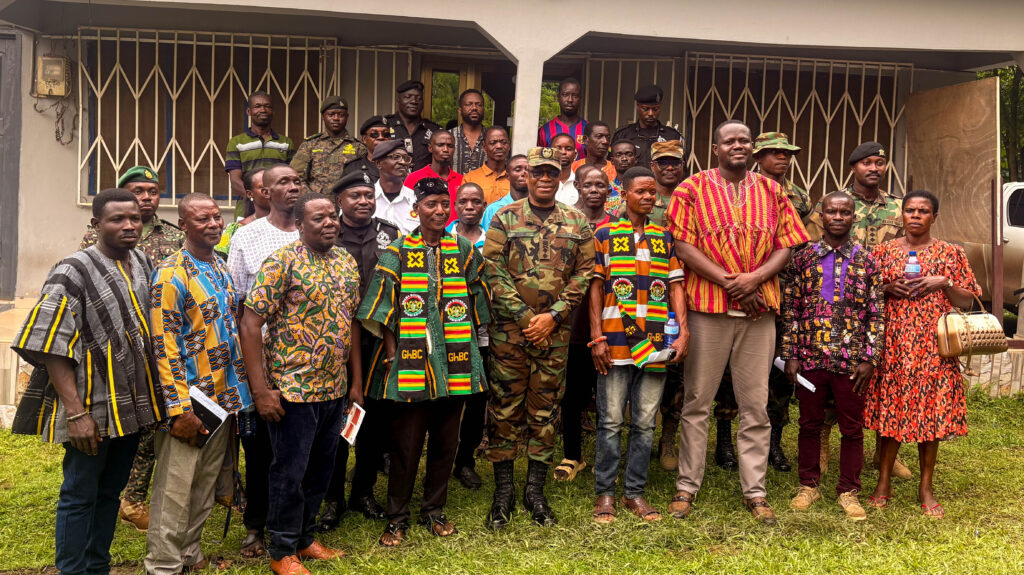
Major General Anthony Ntem, Commissioner General of the Ghana Boundary Commission, led a delegation on a 5-day operational assessment and stakeholder engagements from July 27 to 31, 2026, along the international boundary in the Kadjebi District, Nkwanta South Municipality, and Nkwanta North District.
Background & Context
The Ghana Boundary Commission's operational assessment and stakeholder engagements were conducted against the backdrop of the Commission's ongoing efforts to strengthen boundary governance, enhance border security, and deepen stakeholder engagement at the border community level.
The Commission's assessment aimed to assess the development and human security challenges confronting communities along Ghana's Eastern frontier and to promote effective boundary governance, safeguard Ghana's international boundaries, and advance the socio-economic development of border communities.
Key Findings
During the stakeholder engagements, border communities along the Ghana/Togo International Boundary raised concerns over the poor state of development in their communities, including poor mobile network connectivity, lack of road infrastructure, educational and healthcare facilities, and security presence.
Residents of Chillinga, for instance, decried the absence of a motorable road linking their community to Nkwanta, the municipal capital, which compelled farmers and beekeepers to walk for nearly four hours before accessing transport to convey their produce to market.
Broader Implications
The findings of the Ghana Boundary Commission's operational assessment and stakeholder engagements have far-reaching implications for the promotion of effective boundary governance, safeguarding Ghana's international boundaries, and advancing the socio-economic development of border communities.
The Commission's commitment to promoting effective boundary governance, safeguarding Ghana's international boundaries, and advancing the socio-economic development of border communities through sustained collaboration with local authorities, security agencies, traditional leaders, and development partners is a welcome development.
Looking Ahead
The Ghana Boundary Commission's operational assessment and stakeholder engagements have set the stage for sustained collaboration between local authorities, security agencies, traditional leaders, and development partners to promote effective boundary governance, safeguard Ghana's international boundaries, and advance the socio-economic development of border communities.
The Commission's commitment to addressing the concerns raised by border communities and implementing the necessary interventions to promote effective boundary governance, safeguard Ghana's international boundaries, and advance the socio-economic development of border communities is a major step forward in promoting the socio-economic development of border communities.






0 Comments
Leave a Comment
No comments yet. Be the first to share your thoughts!