
Key Takeaways
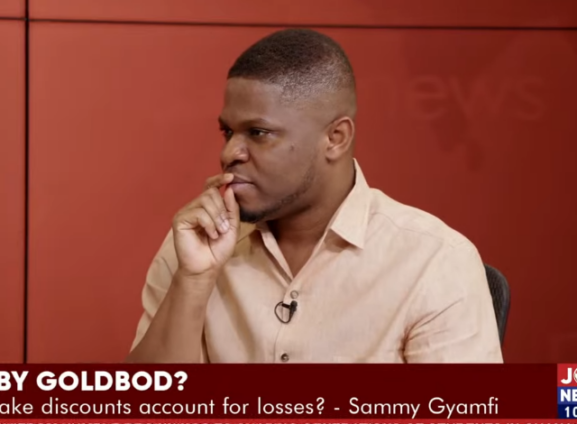
- The Gold Board CEO contends that the New Patriotic Party’s criticism of the Domestic Gold Purchase Programme contradicts its earlier defence of the Gold‑for‑Oil scheme.
- The opposition previously rejected IMANI Africa’s allegation of a GH₵7.2 billion leak in the G4O programme as unsupported by audited data.
- Gyafi urges analysts to balance reported accounting losses with the broader macro‑economic benefits generated by the domestic programme.
- He appeals for a uniform benchmark when evaluating state‑run initiatives that involve foreign‑exchange support.
Sammy Gyafi, chief executive of the Ghana Gold Board, highlighted an apparent inconsistency in the New Patriotic Party’s public statements regarding two flagship gold‑related initiatives. While the party dismissed earlier accusations of financial leakage in the Gold‑for‑Oil arrangement, it now characterises the cost profile of the Domestic Gold Purchase Programme as evidence of mismanagement.
The debate surfaces amid ongoing scrutiny of Ghana’s strategy to leverage its gold reserves for foreign‑exchange earnings, a policy thread that has shaped fiscal planning since the early 2010s.
Political Context and Past Controversies
The Gold‑for‑Oil (G4O) programme, launched in 2017, allowed the Bank of Ghana to receive oil imports in exchange for gold, thereby bolstering foreign‑exchange reserves. In 2025, think‑tank IMANI Africa claimed the scheme suffered a GH₵7.2 billion shortfall, a charge the NPP publicly refuted, citing audited financial statements that showed no diversion of funds.
That rebuttal emphasized the transparency of the central bank’s reporting and framed the expenditure as a necessary liquidity injection rather than a sign of corruption. The party’s narrative positioned the costs as a strategic trade‑off to stabilise the foreign‑exchange market.
Economic Rationale of the Domestic Gold Purchase Programme
The Domestic Gold Purchase Programme, introduced in 2023, seeks to acquire locally mined gold for resale on the international market, with proceeds earmarked for foreign‑exchange acquisition. Proponents argue that the scheme diversifies revenue streams and reduces reliance on external borrowing.
Critics focus on the accounting losses reported by the Gold Board, suggesting that the programme’s price differentials erode potential gains. Gyafi counters that a narrow accounting view overlooks ancillary benefits such as job creation in mining communities, increased tax receipts, and the stabilization of the cedi through added export earnings.
Implications for Policy Consistency
If the NPP applies divergent standards—exonerating the G4O costs while condemning similar outlays in the domestic programme—it risks undermining public confidence in fiscal oversight. Consistent criteria are essential for evaluating whether a programme’s net economic impact justifies its upfront expenditures.
The debate also raises broader questions about the role of state‑run enterprises in managing commodity revenues. Transparent cost‑benefit analyses, anchored in both financial statements and macro‑economic outcomes, could provide a more balanced framework for future assessments.
Looking Ahead
Stakeholders anticipate a parliamentary review of the Domestic Gold Purchase Programme later this year, where auditors are expected to present a detailed cost‑effectiveness study. The outcome may set a precedent for how Ghana balances immediate fiscal pressures with long‑term resource‑based strategies.
Regardless of political positioning, the central issue remains the establishment of a uniform metric that distinguishes legitimate programme expenses from genuine financial impropriety, thereby safeguarding both economic stability and public trust.




0 Comments
Leave a Comment
No comments yet. Be the first to share your thoughts!