
Key Takeaways
- GMTF Administrator Adjoa Obuobia Darko‑Opoku urges mining firms to fund health services in mining regions.
- She calls for a shift from traditional infrastructure projects to sustainable healthcare investment.
- Proposed reforms could tie operating licences to measurable health outcomes.
- Analysts warn that neglecting health undermines long‑term economic stability.
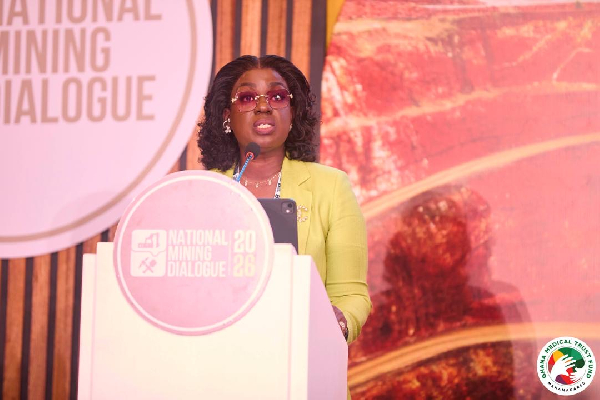
At the National Mining Dialogue 2026 in Accra, Adjoa Obuobia Darko‑Opoku, administrator of the Ghana Medical Trust Fund, framed the nation’s true wealth as its people rather than its mineral deposits. Speaking under the theme “Rethinking the Social License to Operate,” she challenged executives, investors and policymakers to broaden corporate social responsibility beyond roads, schools and boreholes.
Darko‑Opoku’s remarks arrived as Ghana’s mining sector confronts mounting pressure to demonstrate tangible benefits for host communities. While infrastructure projects have long been the hallmark of CSR, the health of mining‑dependent populations remains unevenly addressed, creating gaps in disease prevention, emergency response and chronic care.
Background & Context
Ghana’s gold and bauxite extraction accounts for a significant share of national GDP, yet mining towns often experience higher rates of respiratory illness, occupational injuries and water‑borne diseases. Historical CSR initiatives have focused on visible assets—paved roads, classroom blocks and water points—while health infrastructure has lagged behind. The Ghana Medical Trust Fund, established to improve access to affordable medical care, has documented disparities in health outcomes between mining and non‑mining districts.
Internationally, mining companies in Canada, Australia and Chile have begun integrating health metrics into their social contracts, recognizing that workforce productivity and community stability are interlinked. Ghana’s regulatory framework, however, still treats health contributions as optional philanthropy rather than a licensing prerequisite.
Redefining Corporate Social Responsibility
Darko‑Opoku proposes a tiered model where companies allocate a fixed percentage of revenue to health‑related projects, such as clinic construction, mobile health units and training for local health workers. She emphasizes that investments should be coordinated with the Ministry of Health to avoid duplication and ensure alignment with national health priorities.
Economic analysts suggest that embedding health spending into CSR could reduce long‑term costs for both firms and the state. Early treatment of occupational ailments lowers absenteeism, while robust community health systems mitigate the risk of social unrest that can disrupt operations.
Stakeholders in the dialogue echoed the call for measurable targets, proposing that future mining licences incorporate health impact assessments and periodic audits conducted by independent bodies.
Implications for Mining Communities
Enhanced health infrastructure promises to improve life expectancy, child mortality rates and overall quality of life in remote mining zones. Access to preventive services can also curb the spread of diseases that threaten both local populations and migrant workers.
Moreover, a health‑centric CSR approach may foster stronger social contracts, granting mining firms greater operational stability and community goodwill. This, in turn, could attract further investment by signaling a commitment to sustainable development.
Critics caution that without transparent governance, funds could be misallocated. They advocate for community‑led monitoring committees to oversee project implementation and ensure accountability.
Looking Ahead
Legislators are expected to review proposals that tie health investment to mining permits, potentially reshaping the sector’s regulatory landscape. If adopted, the framework could serve as a benchmark for other resource‑rich African economies seeking to balance extraction with human development.
Continued dialogue among government agencies, industry leaders and civil society will determine whether Ghana’s mining license evolves from a purely economic instrument into a catalyst for lasting public health gains.





0 Comments
Leave a Comment
No comments yet. Be the first to share your thoughts!