
Key Takeaways
- Act 1117 designates informal retail spaces exclusively for Ghanaian citizens.
- GIPA and GUTA plan a revitalised inter‑agency task force to enforce the reserve.
- Violations attract an initial fine of GH¢60,000‑GH¢120,000 and monthly penalties up to GH¢12,000.
- Public education and diplomatic outreach will support compliance across the market.
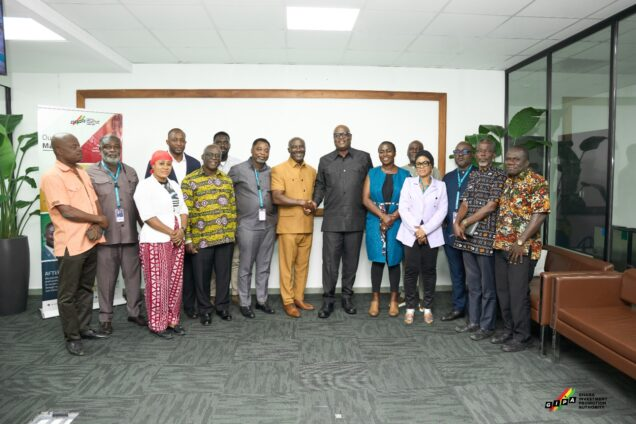
The Ghana Investment Promotion Authority (GIPA) and the Ghana Union of Traders Association (GUTA) convened under the Ministry of Trade, Agribusiness and Industry to chart a coordinated response to illegal foreign participation in the country’s informal retail sector. The meeting, chaired by GIPA chief executive Simon Madjie, reaffirmed the sector’s status as a protected space for Ghanaian traders under the GIPA Act, 2026 (Act 1117).
Participants highlighted the rise of fronting arrangements, where Ghanaian nationals lend their identities to conceal foreign ownership, and agreed on a set of enforcement and awareness measures aimed at preserving livelihoods and upholding investment law.
Legal Framework and Enforcement Mechanisms
Act 1117 explicitly reserves open markets, kiosks and small shops for citizens, a provision reinforced by Section 55(1)(a) which criminalises the sub‑letting of stalls to non‑citizens. Penalties are calibrated at 5,000‑10,000 penalty units for initial breaches and 500‑1,000 units per month thereafter, translating to up to GH¢120,000 upfront and GH¢12,000 monthly under the current GH¢12 per unit rate. Criminal convictions may also invoke fines of 2,000‑4,000 units.
The legal architecture reflects Ghana’s broader commitment to protect the informal economy, which accounts for a substantial share of employment and domestic consumption. Enforcement has traditionally relied on local authorities, but gaps in monitoring have allowed sophisticated fronting schemes to proliferate.
Fronting Practices and Market Impact
Fronting undermines the statutory reserve by allowing foreign capital to infiltrate informal markets without adhering to capital‑requirement thresholds or ownership restrictions. GUTA President Clement Boateng noted that such practices distort competition, marginalise citizen traders, and erode confidence in regulatory fairness.
Empirical studies estimate that the informal sector contributes roughly 30 % of Ghana’s GDP and employs over 70 % of the workforce. Any erosion of its integrity threatens both household incomes and fiscal stability, especially as the sector remains largely untaxed and dependent on self‑regulation.
Internationally, fronting contravenes ECOWAS trade protocols that encourage transparent cross‑border investment while respecting host‑country sovereignty. Ghana’s stance therefore aligns with regional obligations to prevent covert foreign control of protected economic spaces.
Policy Response and Collaborative Measures
GIPA and GUTA proposed reviving an inter‑agency task force that integrates GIPA, MoTAI, local government units, security services and regulatory bodies. The task force will coordinate inspections, share intelligence, and streamline reporting channels for traders to flag suspected violations.
A dedicated monitoring unit, funded jointly by the agencies, will maintain a real‑time database of market licences and ownership structures. Complementary public‑education campaigns will disseminate the legal parameters of Act 1117 through radio, community meetings and digital platforms.
Diplomatic engagement, led by the Minister for Trade in partnership with the Ministry of Foreign Affairs, will inform foreign missions of Ghana’s legal position and ECOWAS commitments, encouraging source‑country compliance among their nationals.
Looking Ahead
Implementation of the task force and monitoring unit is slated for the next quarter, with periodic audits to assess compliance rates. Success will hinge on sustained political will, resource allocation and the ability to balance openness to foreign investment in the formal retail sector with protection of the informal economy.
Long‑term, the framework may serve as a model for other West African states grappling with similar fronting challenges, reinforcing the principle that inclusive growth depends on transparent and enforceable market reservations.






0 Comments
Leave a Comment
No comments yet. Be the first to share your thoughts!