
Key Takeaways
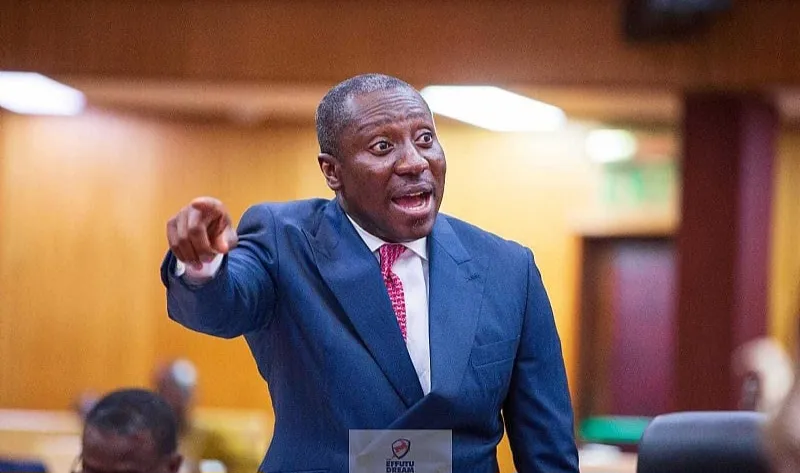
- Alexander Afenyo‑Markin has publicly accused senior judges of bias and a "grand conspiracy" surrounding recent court decisions.
- The Ghana Bar Association condemned the remarks as unethical and a breach of professional etiquette.
- Legal scholars warn that the rhetoric threatens public confidence in the judiciary and may embolden partisan challenges to court authority.
- Historical parallels to the 1994 Radio Eye incident highlight a recurring tension between political actors and Ghanaian legal norms.
In a series of statements spanning November 2025 to August 2026, the Minority Leader of Parliament, Alexander Afenyo‑Markin, alleged that judges have acted in the interest of undisclosed “paymasters” and participated in a “grand conspiracy” to remove former Chief Justice Gertrude Torkornoo. The comments have provoked sharp rebuke from the Ghana Bar Association and reignited a broader conversation about the limits of political criticism of the judiciary.
The controversy emerges against a backdrop of Ghana’s 1992 Constitution, which guarantees freedom of expression while drawing a line between legitimate critique and personal insult. The evolving dispute tests the resilience of those constitutional safeguards and the professional norms that govern interactions between elected officials and the bench.
Background & Context
Ghana’s legal framework has long emphasized the separation of powers, a principle reinforced after the return to constitutional rule in the early 1990s. The 1994 Radio Eye episode, when Dr. Charles Wereko‑Brobby broadcast without a license and was labeled a “Tarzan” by then‑Minister of Information Kofi Totobi Quakyi, set an early precedent for governmental condemnation of perceived lawlessness. The present episode mirrors that language, with Afenyo‑Markin invoking the same metaphor to describe judicial conduct.
Since the 2024 annulment of the Kpandai parliamentary election by the Tamale High Court, the Minority Leader has repeatedly framed judicial decisions as politically motivated. His narrative aligns with a broader pattern of partisan commentary that seeks to cast judicial outcomes as obstacles to party agendas, a trend observed in several Commonwealth democracies.
Afenyo‑Markin’s Recent Remarks
On November 26, 2025, Afenyo‑Markin described the Tamale High Court’s ruling as “shameful” and suggested judges were “serving the interests of their paymasters.” The following month, he labeled a judge who ordered the remand of Abronye DC as “unrespectable,” a characterization that prompted a formal response from the Ghana Bar Association. In August 2026, during an interview on Atinka TV, he accused Chief Justice Paul Baffoe‑Bonnie and Justice Gabriel Scott Pwamang of orchestrating a conspiracy to install a preferred chief justice.
Each statement moves beyond critique of legal reasoning into allegations of personal impropriety, a shift that legal commentators identify as crossing the threshold from protected speech to defamatory insinuation. The lack of evidentiary support for claims of “paymaster” influence raises concerns under Ghanaian defamation law and professional conduct codes.
Professional and Institutional Responses
The Ghana Bar Association issued a joint condemnation on May 18, 2025, describing the leader’s remarks as “unprofessional and unethical.” The association emphasized that judges are entitled to procedural protection and that public attacks on their competence undermine the rule of law. Bar officials cited the Association’s etiquette rules, which prohibit questioning a judge’s qualifications outside formal channels.
Legal scholars from the University of Ghana’s Faculty of Law have warned that such public vilification risks eroding public trust. In a recent symposium, Professor Kwame Mensah argued that “when elected officials weaponize language against the bench, the perceived legitimacy of judicial outcomes diminishes, creating a climate where legal decisions are judged on political loyalty rather than merit.”
Implications for Judicial Independence
The episode highlights a tension between robust political discourse and the protection of judicial independence. While the Constitution protects criticism of public institutions, it also imposes limits to prevent unfounded personal attacks that could intimidate judges. Persistent accusations without substantiation may invite judicial recourse, including contempt proceedings or defamation suits.
International observers note that Ghana’s democratic reputation hinges on the perceived impartiality of its courts. Persistent erosion of that perception could affect foreign investment and Ghana’s standing in regional bodies such as ECOWAS, where judicial credibility is a prerequisite for cross‑border dispute resolution.
Looking Ahead
Future parliamentary sessions are likely to feature motions calling for clearer guidelines on parliamentary speech concerning the judiciary. The Ghana Bar Association has signaled intent to pursue formal complaints if the rhetoric continues unabated. The outcome of any legal action will set a precedent for the permissible scope of political commentary on judicial matters.
Maintaining a balance between freedom of expression and respect for judicial processes will remain a central challenge for Ghana’s democratic institutions. Continued monitoring by civil society and adherence to constitutional safeguards will be essential to preserve confidence in the rule of law.




0 Comments
Leave a Comment
No comments yet. Be the first to share your thoughts!