
Key Takeaways
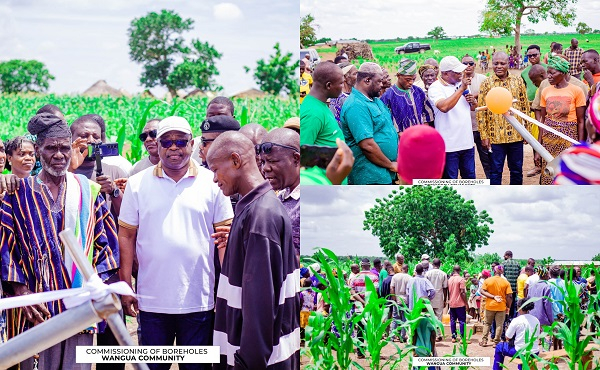
- The North East Region of Ghana has received four newly constructed boreholes to improve access to safe and reliable drinking water.
- The boreholes were commissioned by the Minister of State for Climate Change and Sustainability, Seidu Issifu, with support from the National Investment Bank (NIB).
- The project aims to address climate-related challenges and developmental needs in the region.
- Residents have pledged to protect and maintain the facilities, while appealing for continued support.
The commissioning of the boreholes marks a significant step towards improving access to safe drinking water for residents in the North East Region, who have long faced challenges in this area.
The region's vulnerability to climate-related challenges, including drought and water scarcity, has exacerbated the problem of accessing potable water, making it a pressing developmental issue.
Background & Context
Climate change is a complex and multifaceted issue that affects not only the environment but also development and livelihoods. In Ghana's North East Region, climate-related challenges have had a disproportionate impact on access to essential resources such as water, food, and livelihoods.
The region's arid and semi-arid climate makes it prone to drought and water scarcity, making it difficult for residents to access safe and reliable drinking water. This has significant implications for health, education, and economic development.
Key Findings
The commissioning of the boreholes is a direct response to the region's climate-related challenges and developmental needs. The project is a collaborative effort between the Ministry of State for Climate Change and Sustainability and the National Investment Bank (NIB).
The boreholes are equipped with modern technology to ensure efficient and sustainable water supply, and residents have pledged to protect and maintain the facilities.
Broader Implications
The successful implementation of this project has significant implications for Ghana's development agenda, particularly in the areas of climate change, water, and sanitation.
The project demonstrates the government's commitment to addressing climate-related challenges and developmental needs, particularly in vulnerable regions such as the North East.
Looking Ahead
As the region continues to grapple with climate-related challenges, the commissioning of the boreholes provides a much-needed boost to access to safe and reliable drinking water.
The government's commitment to addressing developmental needs, particularly in vulnerable regions, is a welcome development and sets a precedent for future initiatives.






0 Comments
Leave a Comment
No comments yet. Be the first to share your thoughts!