
Key Takeaways
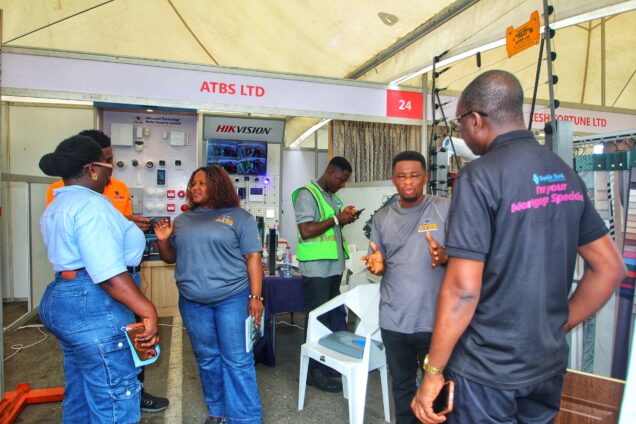
- Day one of the three‑day Habitat Fair attracted thousands of prospective homeowners and industry players at Achimota Mall.
- Exhibitors presented financing options, eco‑friendly construction materials and digital tools that reflect Ghana’s push toward affordable, sustainable housing.
- The event, backed by Republic Bank and Drive EV GH, underscores a growing public‑private partnership model aimed at closing the nation’s housing gap.
- Organisers anticipate increased footfall on Saturday and Sunday as buyers seek concrete pathways from “dream” to “ownership.”
The inaugural day of the JoyNews Republic Bank Habitat Fair 2026 concluded with a robust turnout at Achimota Mall, where visitors explored a spectrum of products ranging from modular homes to smart‑energy solutions. The fair’s theme, “Dream it. Explore it. Own it,” framed the experience as a conduit between aspiration and acquisition.
Stakeholders reported that interactive booths, on‑site financing desks and live demonstrations facilitated real‑time decision‑making, positioning the mini‑fair as a microcosm of Ghana’s evolving housing ecosystem.
Background & Context
Ghana’s urban population has expanded by over 30 % in the past decade, intensifying demand for affordable housing and prompting government initiatives such as the “National Housing Policy 2020‑2025.” The Habitat Fair aligns with these policy goals by aggregating supply‑side actors—builders, material manufacturers and financial institutions—under a single roof.
Historically, similar expos have been confined to trade‑only environments, limiting public engagement. The 2026 iteration marks a shift toward consumer‑centric programming, reflecting a broader trend of democratizing access to real‑estate information across West Africa.
Exhibitor Highlights
Republic Bank’s “We’re the one for you!” campaign anchored a suite of mortgage products tailored to first‑time buyers, incorporating flexible repayment schedules linked to income verification APIs. Parallelly, Drive EV GH showcased electric‑powered construction equipment, signaling a convergence of sustainable mobility and building practices.
Material suppliers such as Saint‑Gobain Ghana and Akwaaba Building Materials introduced low‑carbon cement blends, while tech firms like CTECHI Ghana LTD demonstrated property‑management platforms that integrate satellite imaging for land‑use planning. These offerings illustrate an industry pivot toward climate‑responsive construction.
Broader Implications
The convergence of finance, technology and green construction at the fair suggests a potential acceleration of Ghana’s housing supply chain efficiency. By reducing information asymmetry, the event may lower transaction costs and stimulate competition among developers, which could translate into more affordable units for middle‑income earners.
Moreover, the partnership model—combining a major bank, a mobility startup and a coalition of material providers—offers a template for future public‑private collaborations aimed at addressing structural deficits in other sectors, such as renewable energy and transportation.
Looking Ahead
Organisers project that the remaining two days will see heightened engagement from regional investors seeking to capitalize on Ghana’s stable macroeconomic outlook and its inclusion in the African Continental Free Trade Area. The fair’s success may influence policymakers to expand similar platforms nationwide.
Continued monitoring of buyer conversion rates and post‑fair financing uptake will provide measurable indicators of the event’s impact on the country’s housing pipeline.






0 Comments
Leave a Comment
No comments yet. Be the first to share your thoughts!