
Key Takeaways
- Federal budget allocates approximately N2 trillion to electricity subsidies for 2024.
- Authorities reiterate that consumer tariffs will not rise in the near term.
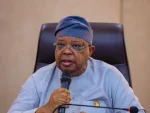
- Power Minister Joseph Tegbe stresses the need for a commercially sustainable sector while protecting low‑income households.
- The allocation exceeds the N1.93 trillion subsidy projected for 2025.
Nigeria’s federal administration announced a subsidy package that approaches N2 trillion for the current fiscal year. The allocation is intended to offset the gap between generation costs and the price paid by end‑users.
Minister Joseph Tegbe framed the measure as a bridge toward a market‑oriented power system that can attract private investment without imposing abrupt price shocks on vulnerable consumers.
Background & Context
For decades Nigeria’s electricity network has operated under chronic under‑investment, frequent outages, and a reliance on diesel‑fuelled generators. Subsidies have been a recurring fiscal tool to keep household bills affordable, yet they have also strained public finances.
The 2024 budget arrives after a series of reforms aimed at unbundling generation, transmission and distribution assets. International donors and multilateral banks have signaled willingness to finance infrastructure upgrades provided that tariff structures reflect cost recovery.
Policy Rationale and Financial Scope
Allocating N2 trillion represents a modest increase over the N1.93 trillion figure cited for the 2025 fiscal plan. The rise reflects inflationary pressures on fuel imports and the anticipated expansion of renewable‑energy projects.
By holding tariffs steady, the government seeks to avoid a sudden spike in household expenses that could provoke social unrest. Simultaneously, the subsidy is positioned as a temporary measure pending the maturation of a competitive wholesale market.
Critics argue that subsidies mask structural inefficiencies and delay necessary tariff reforms. Proponents counter that a gradual transition safeguards electricity access for low‑income families while the sector restructures.
Implications for the Power Market
The sizable subsidy pool is expected to bolster the cash flow of distribution companies, enabling them to settle debts to generators and reduce load‑shedding incidents.
Private investors monitoring the policy may interpret the subsidy as a signal of governmental commitment to sector stability, potentially unlocking further capital for grid modernization.
However, the fiscal burden of the subsidy could constrain other budgetary priorities, prompting debates within the legislature about long‑term sustainability.
Looking Ahead
Future policy cycles are likely to focus on phased tariff adjustments aligned with cost‑recovery benchmarks established by the regulator. Monitoring mechanisms will be essential to assess whether subsidies translate into measurable improvements in supply reliability.
Successful implementation could set a precedent for other African economies grappling with the balance between affordable electricity and financially viable power markets.






0 Comments
Leave a Comment
No comments yet. Be the first to share your thoughts!