
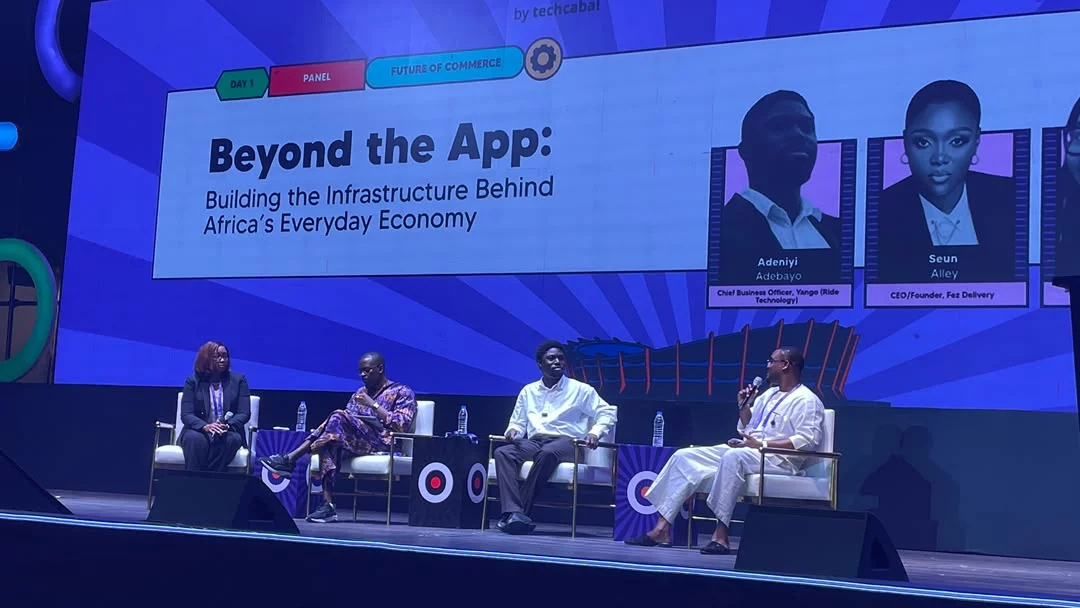
The panel “Beyond the App: Building the Infrastructure Behind Africa’s Everyday Economy” was held on the opening day of Moonshot by TechCabal 2026, bringing together executives from ride‑hailing, delivery and electric‑mobility firms to discuss what lies beyond the software layer of Africa’s growing digital market.
Key challenges identified
“The app is just the front‑end,” said Sanusi Adedamola, chief operating officer of Fez Delivery, representing CEO Seun Alley.
Sanusi’s comment underscored that getting a service to a user’s phone is only one part of a broader logistical puzzle. Companies must secure vehicle fleets, ensure reliable location data, and align operating economics with local market conditions.
Panelists noted that many African cities contend with unreliable power supplies, patchy internet connectivity and fragmented cross‑border payment systems, factors that raise costs and hinder expansion. Nigeria’s Lagos market was cited as an example where uneven connectivity still hampers businesses despite the city’s status as a tech hub.
Financing constraints were also highlighted. Chinwe Adighiogu, senior vice‑president of products at electric‑vehicle firm MAX, explained that detailed data on riders’ activity, earnings, maintenance and battery usage can help assess whether vehicle assets generate sufficient income to cover operating expenses and loan repayments. He added that such operational data enables lenders to evaluate borrowers who lack traditional banking histories.
World Bank research published in The World Bank Economic Review in 2024 was referenced, showing that investment in roads and electricity boosts activity in Africa’s manufacturing and services sectors. Participants debated whether infrastructure should be built by individual firms or shared across the ecosystem. Mapping streets and neighbourhoods, as well as shared charging and battery‑swapping networks, were cited as costly but potentially multi‑user assets.
“A slick app means little if a delivery cannot reach a customer, a payment stalls or a vehicle cannot find a charging point,” the panel concluded, stressing that the real test for Africa’s digital economy is the robustness of the underlying infrastructure.
The discussion underscored that future growth will depend on coordinated investment in transport, data, power and financing mechanisms, rather than on app development alone.



0 Comments
Leave a Comment
No comments yet. Be the first to share your thoughts!