
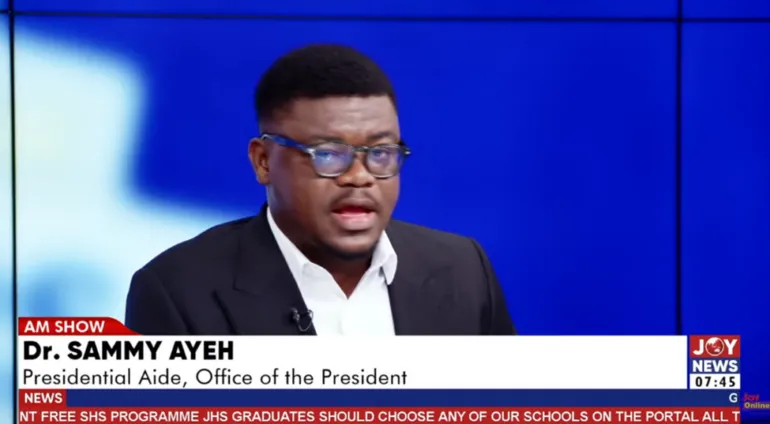
Key Takeaways
- Coalition of Unemployed Graduates with Disabilities declined to hand its petition to Dr Samuel Ayeh.
- Dr Ayeh emphasized his senior status in the Office of the President and offered to wait for a more senior recipient.
- The episode underscores persistent gaps in employment pathways for disabled graduates in Ghana.
- The President’s office conveyed best wishes while the petition remains pending.
The coalition representing unemployed graduates with disabilities approached the Office of the President with a formal petition demanding targeted employment measures. Their request to deliver the document to a senior minister was rebuffed when Dr Samuel Ayeh, a presidential aide, presented himself as the President’s designated representative.
Dr Ayeh responded publicly, affirming his authority to receive the petition and expressing respect for the group’s decision to seek a higher‑ranking official. He also relayed the President’s goodwill toward the coalition.
Background & Context
Ghana’s labour market has long struggled to integrate graduates with disabilities, despite constitutional guarantees and affirmative‑action policies. Statistics from the Ghana Statistical Service indicate that unemployment among persons with disabilities exceeds the national average by a significant margin, a disparity that fuels periodic advocacy campaigns.
Previous petitions have called for dedicated internship schemes, tax incentives for inclusive employers, and the enforcement of the Persons with Disability Act. The current coalition builds on that legacy, seeking a direct dialogue with the highest echelons of government to accelerate implementation.
Government Response
In a televised briefing, Dr Ayeh clarified that his role as a senior member of the Office of the President authorises him to receive petitions on the President’s behalf. He reiterated that the President’s office remains open to dialogue, but he respected the coalition’s preference for a “senior‑most” official.
The aide’s remarks also highlighted procedural flexibility, suggesting the petition could be deferred until the coalition identifies an acceptable recipient. By extending the President’s best wishes, Dr Ayeh signalled a conciliatory tone without committing to immediate policy action.
Stakeholder Positions
The coalition’s insistence on a higher‑ranking official reflects a broader mistrust of intermediary channels, which activists argue have historically diluted their demands. Leaders of the group warned that delivering the petition to an aide could undermine its urgency and visibility.
Civil society organisations monitoring disability rights welcomed the public exchange, noting that transparency may pressure the administration to address systemic barriers. However, some commentators cautioned that repeated procedural disputes risk diverting attention from substantive policy reforms.
Looking Ahead
The stalemate may prompt the coalition to pursue alternative avenues, such as parliamentary petitions or legal challenges under the Persons with Disability Act. A resolution could set a precedent for how advocacy groups engage with executive offices in Ghana.
Policy analysts suggest that a coordinated response—combining legislative action, private‑sector incentives, and robust monitoring—will be essential to close the employment gap for disabled graduates. The outcome of this petition will likely influence future discourse on inclusive labour strategies.



0 Comments
Leave a Comment
No comments yet. Be the first to share your thoughts!