
Key Takeaways
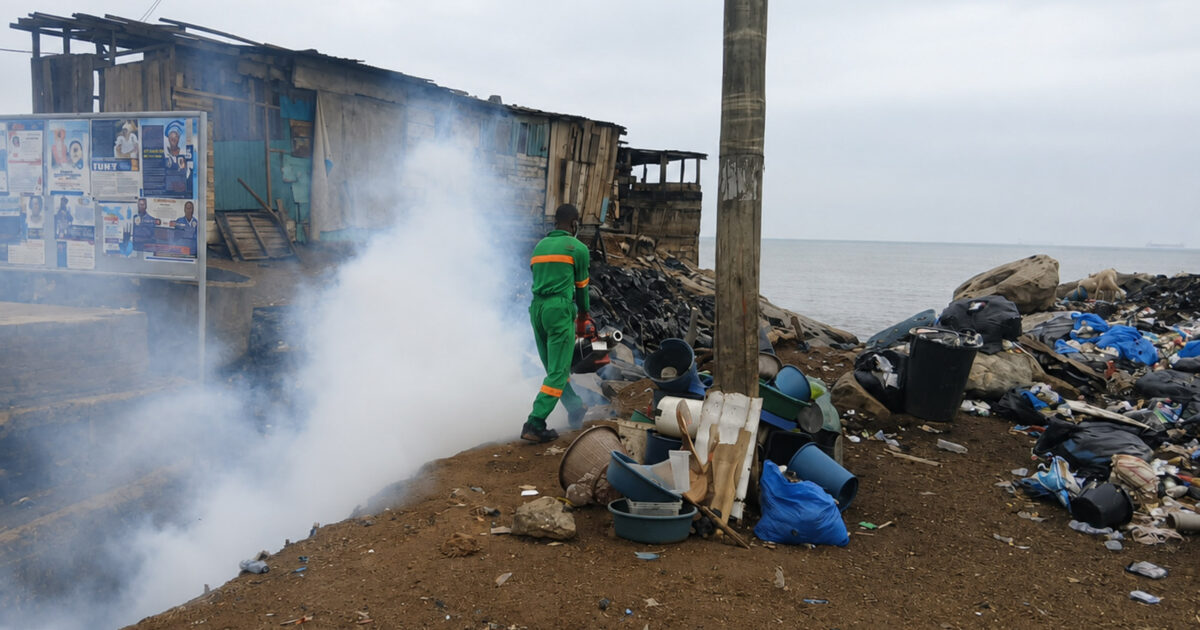
- Zoomlion Ghana started a coordinated fumigation and disinfection operation in flood‑affected communities of the Western Region.
- The initiative targets stagnant water and public spaces to interrupt mosquito breeding and reduce cholera and typhoid risks.
- The effort covers all 14 MMDAs, beginning in Sekondi‑Takoradi Metropolis and Effia‑Kwesimintsim Municipality, and is offered free to residents.
- Local officials and residents have praised the rapid response as a vital complement to municipal sanitation work.
Recent heavy rains caused extensive flooding across Ghana’s Western Region, submerging low‑lying neighborhoods and leaving behind pools of stagnant water. Public health officials warned that such conditions create fertile breeding grounds for vectors that transmit cholera, typhoid and malaria.
In response, Zoomlion Ghana Limited mobilised its corporate social responsibility unit to launch a region‑wide fumigation and disinfection campaign. The operation, described as a free emergency service, aims to mitigate the imminent disease risk while supporting municipal sanitation efforts.
Background & Context
Ghana’s coastal belt has a documented history of flood‑induced health crises, with the 2014 and 2020 events prompting national emergency measures. The pathogen profile typically shifts after floods, with Vibrio cholerae and Salmonella Typhi surfacing alongside increased Anopheles mosquito populations.
The Western Region, home to the industrial hub of Sekondi‑Takoradi, faces compounded challenges due to rapid urbanisation and inadequate drainage infrastructure. Past outbreaks have strained local clinics, highlighting the need for pre‑emptive vector control.
Operational Details
The campaign commenced simultaneously in the Sekondi‑Takoradi Metropolis and the Effia‑Kwesimintsim Municipality, deploying teams equipped with WHO‑approved insecticides and disinfectants. Teams are tasked with treating stagnant water bodies, public latrines, market stalls and schools across all 14 Metropolitan, Municipal and District Assemblies.
Coordination is overseen by Zoomlion’s Western Regional Manager, Patrick Akorful, who instructed residents to grant unhindered access to fumigation crews. The operation follows a mapped schedule that prioritises high‑density settlements and areas reporting the greatest water accumulation.
Logistics rely on a fleet of 20 spray trucks and a mobile command centre that monitors chemical application rates to ensure compliance with environmental safety standards.
Community Response & Expert Views
Residents such as Grace Mensah of Kwesimintsim reported immediate relief, noting a reduction in mosquito activity and a sense of security for children. Community leaders have publicly thanked Zoomlion for the rapid deployment.
Assembly Member Abraham Rex Kotobebi affirmed that the private‑sector effort dovetails with the Sekondi‑Takoradi Metropolitan Assembly’s ongoing cleanup drives, creating a layered defence against disease spread. Environmental health analyst Benjamin Baah highlighted the initiative’s role in strengthening preventive health frameworks, emphasizing that systematic fumigation can lower incidence rates when combined with water‑borne disease surveillance.
Health experts caution that fumigation alone cannot eradicate risk; sustained improvements in drainage and waste management remain essential for long‑term resilience.
Looking Ahead
Authorities plan to extend monitoring beyond the immediate post‑flood period, integrating data from local clinics to gauge any uptick in cholera, typhoid or malaria cases. Zoomlion has pledged to maintain a rapid‑response unit ready for future emergencies.
The partnership model demonstrated here may inform national policy, encouraging other corporations to align CSR initiatives with public‑health objectives, thereby expanding the resource pool available for disaster mitigation.






0 Comments
Leave a Comment
No comments yet. Be the first to share your thoughts!