
Key Takeaways
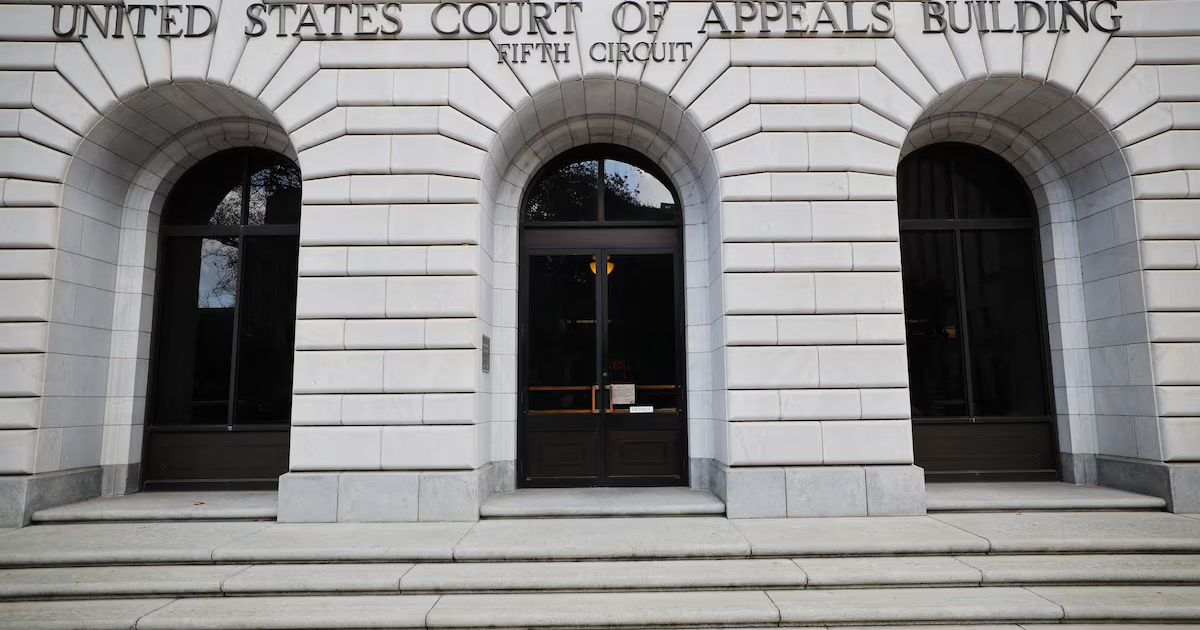
- 5th U.S. Circuit Court of Appeals will hear arguments on whether Judge Henry Wingate should be reassigned after an AI‑generated order contained factual errors.
- The order, issued in July 2025, temporarily blocked Mississippi's ban on diversity, equity and inclusion programs in public education.
- Judge Wingate disclosed that a law clerk used the AI tool Perplexity to draft the order, labeling the incident a lapse in human oversight.
- The case raises broader questions about AI integration in federal courts and the standards for judicial review.
The federal judiciary is confronting its first high‑profile challenge involving artificial intelligence in opinion drafting. A three‑judge panel of the 5th U.S. Circuit Court of Appeals has scheduled oral argument for August 31 to decide whether Judge Henry Wingate of the Southern District of Mississippi should be removed from a case that hinged on an AI‑assisted order riddled with inaccuracies.
The dispute originates from a temporary restraining order issued on July 20, 2025, which halted state enforcement of a ban on diversity, equity and inclusion initiatives in Mississippi’s universities and public schools. Subsequent scrutiny revealed that the order referenced nonexistent parties and contained other material errors, prompting the state to seek a preliminary injunction reversal.
Judicial Use of AI Under Scrutiny
Judge Wingate’s acknowledgment that a clerk employed Perplexity, an AI‑driven research assistant, to synthesize docket information marks a rare admission of machine assistance in federal rulings. The judge characterized the reliance on the tool as a “foundational drafting assistant” and admitted that the final draft was posted without the customary human verification.
Such disclosures echo testimony before the Senate Judiciary Committee, where Chairman Chuck Grassley highlighted similar incidents involving other district judges. The committee’s investigation underscored a pattern of “error‑ridden” AI‑generated documents that bypassed established editorial safeguards.
Procedural Background and Recent Ruling
The original restraining order sought to preserve ongoing DEI programs pending litigation. State attorneys quickly contested the order, citing specific factual misstatements that could undermine the injunction’s legitimacy. In response, Judge Wingate issued a revised order that removed the erroneous references but did not provide a public explanation for the initial mistakes.
Following the revision, the state appealed the preliminary injunction to the 5th Circuit, arguing that the district court’s reliance on AI compromised the integrity of the decision‑making process. The appellate panel’s request for briefing on potential reassignment signals a willingness to consider judicial competence alongside procedural propriety.
Implications for Legal Practice
If the appellate court determines that reassignment is warranted, it could set a precedent for evaluating AI‑assisted judicial work. Legal scholars anticipate that courts may adopt stricter oversight protocols, mandating explicit disclosure of AI usage and instituting mandatory human review checkpoints before issuance of orders.
Beyond the immediate case, the episode may accelerate discussions within the Federal Judicial Center and bar associations about training, ethical guidelines, and liability for AI‑generated content. The balance between efficiency gains and the risk of factual distortion remains a central concern for practitioners.
Looking Ahead
The forthcoming oral arguments will likely explore whether the errors stemmed from the AI tool itself, inadequate supervision, or a combination of both. The outcome could influence how lower courts integrate emerging technologies while preserving the standards of judicial accuracy.
Regardless of the panel’s decision, the incident underscores the judiciary’s need to develop transparent frameworks for AI adoption, ensuring that technological assistance enhances rather than undermines the rule of law.





0 Comments
Leave a Comment
No comments yet. Be the first to share your thoughts!