

Key Takeaways
- MPC bases rate decisions on forward‑looking inflation projections.
- Recent Middle‑East volatility prompted a pause in the easing cycle.
- Committee now adopts majority voting rather than consensus.
- New observership programme connects university students with monetary‑policy deliberations.
Bank of Ghana Governor Dr Johnson Asiama outlined the strategic considerations that shape the Monetary Policy Committee’s recent choice to keep the policy rate unchanged. His comments were delivered at the launch of the inaugural MPC Educational Observership Programme, an initiative that brings economics and business students into the central bank’s decision‑making environment.
The programme, piloted with students from the University of Ghana, aims to demystify the interplay between inflation expectations, external risk factors and the internal dynamics of the MPC. Asiama’s remarks shed light on how those elements converge in the formulation of monetary policy.
Inflation Outlook as Policy Compass
The committee’s primary mandate remains the containment of price pressures that threaten purchasing power. By projecting inflation trajectories, the MPC gauges the magnitude and timing of any corrective action. Asiama emphasized that the rate‑setting process is anchored to these forecasts rather than to past data points.
In practice, the board relies on a dedicated research unit that monitors price trends, wage growth and commodity price movements. The unit’s output feeds into scenario analysis that quantifies the probability of overshooting the inflation target, thereby informing the stance of monetary policy.
External Shocks and Rate Decision
Developments in the Middle East, including heightened geopolitical tension, introduced a layer of uncertainty that could reverberate through global oil markets. Given Ghana’s dependence on imported energy, any upward pressure on oil prices would feed directly into domestic inflation.
Originally, the MPC had signalled a potential easing of the policy rate. However, the emergence of fresh risk signals prompted a reassessment, leading to a decision to hold the rate steady. The move illustrates the committee’s willingness to prioritize price stability over short‑term growth incentives when external risks materialize.
Governance Reforms within the MPC
Historically, the MPC operated on a consensus model that required unanimity among members. Asiama disclosed a shift toward majority voting, arguing that consensus can suppress dissenting viewpoints and dilute analytical rigor.
The new framework preserves the independence of each member, encouraging robust debate and transparent articulation of individual assessments. Such a structure aligns with best practices in central‑bank governance, where diverse perspectives enhance the credibility of policy outcomes.
Educational Observership and Future Talent
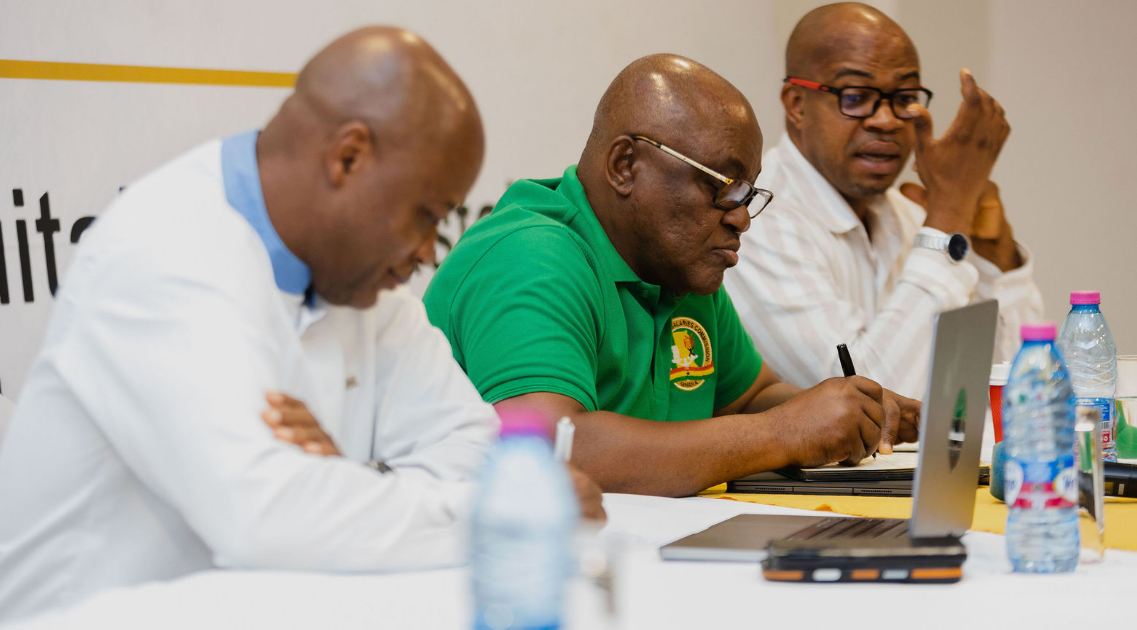
The observership programme bridges academia and policy by allowing students to attend MPC meetings, interact with senior officials and observe the deliberative process in real time. Participants gain insight into how inflation expectations are formed, how emerging risks are evaluated, and how internal dynamics shape final decisions.
By exposing the next generation of economists to the practical challenges of monetary policy, the Bank of Ghana cultivates a pipeline of talent equipped to navigate complex macro‑economic environments. The initiative also reinforces public understanding of the central bank’s role in safeguarding economic stability.
Looking Ahead
Continued monitoring of global commodity markets and regional geopolitical developments will likely dominate the MPC’s agenda in the coming months. The adoption of majority voting suggests that future policy adjustments may reflect a broader spectrum of analytical judgments.
Enhanced engagement with academic institutions promises to deepen the analytical capacity of Ghana’s monetary policy framework, reinforcing its resilience amid an increasingly interconnected economic landscape.





0 Comments
Leave a Comment
No comments yet. Be the first to share your thoughts!