
Key Takeaways
- Climate-driven temperature changes are projected to cause an additional 430,000 deaths annually by 2050, with 10 times more deaths occurring in poor countries.
- Access to electricity, particularly for cooling, plays a crucial role in saving lives.
- Many countries expected to suffer from rising temperatures lack the resources to provide enough electricity for cooling systems.
- The report identifies areas in 18 countries, home to 676 million people, which are trapped in a deadly combination of extreme heat and lack of cooling.
The Climate Impact Lab has issued a dire warning about the impact of climate change on global temperatures, predicting that an additional 430,000 people will die annually by 2050 due to extreme heat. This number is disproportionately high in poor countries, where access to electricity, particularly for cooling, is limited.
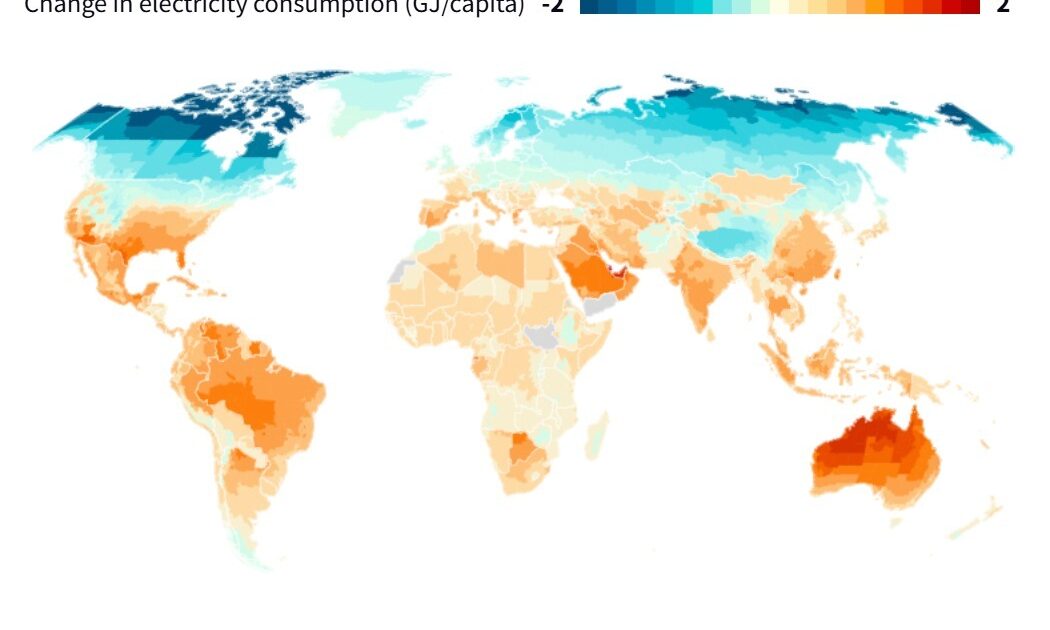
The report highlights the stark contrast between countries that are rich enough to adopt cooling technologies and those that are not. For instance, countries in the Gulf region, such as Bahrain, Kuwait, and Saudi Arabia, consume much more electricity for cooling and are projected to have big increases, leading to far fewer deaths.
Background & Context
Climate change is not just an environmental issue, but also a human rights concern. The report underscores the need for countries to prioritize access to electricity, particularly in regions that are expected to be hit hardest by rising temperatures. This includes northern sub-Saharan Africa, where Niger, Mali, Burkina Faso, and Chad are projected to experience the highest increases in heat-related deaths.
The report also highlights the importance of electricity access in preventing heat-related deaths. In countries where electricity use is growing, such as in Southern Asia, the growth of electricity use per person is projected to be significant, leading to a decrease in heat-related deaths.
Key Findings
The report identifies areas in 18 countries, home to 676 million people, which are trapped in a deadly combination of extreme heat and lack of cooling. These countries are expected to see little increase in electricity supply, making it difficult for people to access cooling technologies.
The report projects that around 377,000 people in these areas will die annually by 2050 due to extreme heat. All of these people live in either low-income or lower middle-income countries today, mostly in northern sub-Saharan Africa.
The report also highlights the importance of adaptation measures in preventing heat-related deaths. It recommends that communities find ways to protect people from heat, such as improved energy access, employing heat early warning systems and action plans, expanded healthcare access, and targeted social programs.
Broader Implications
The report's findings have significant implications for global health, economy, and politics. The projected increase in heat-related deaths will put a strain on healthcare systems, economies, and communities, particularly in poor countries.
The report also highlights the need for countries to prioritize adaptation measures, such as investing in renewable energy and improving energy access, to prevent heat-related deaths.
Looking Ahead
The Climate Impact Lab is developing a global guide to help governments and communities identify the most effective ways to adapt to climate change. The report is the second in its Adaptation Roadmap series, which argues that countries must also invest in practical measures that help people survive the growing impacts of climate change.
The report's findings underscore the need for immediate action to prevent heat-related deaths. By prioritizing adaptation measures and investing in renewable energy, countries can reduce the impact of climate change and save lives.






0 Comments
Leave a Comment
No comments yet. Be the first to share your thoughts!