
Key Takeaways
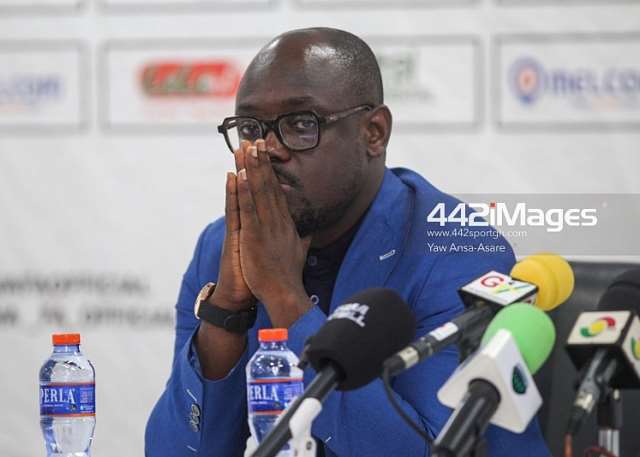
- GFA communications director Henry Asante Twum says the federation will not confront President John Mahama over his criticism.
- Mahama’s remarks highlighted refereeing irregularities and alleged match‑fixing in the domestic league.
- The GFA pledged to tighten referee oversight and accelerate talent‑development programmes.
- Stakeholders anticipate reforms could restore public confidence in Ghanaian football.
President John Mahama’s recent commentary on the state of Ghana football sparked a national conversation about governance, integrity and the future of the sport. His call for the Ghana Football Association (GFA) to address refereeing anomalies and match‑fixing allegations placed the federation under heightened scrutiny.
Communications Director Henry Asante Twum responded on Luv FM, emphasizing that the GFA will not enter a confrontational stance with the former president and will instead focus on improving existing initiatives.
Background & Context
Ghana’s football ecosystem has endured periodic crises, most notably the 2018 dissolution of the GFA following a corruption exposé that led to a year‑long hiatus in domestic competition. Since the appointment of a new executive committee, the association has pursued reforms aimed at restoring credibility, yet persistent concerns about referee impartiality and alleged match manipulation linger.
Mahama’s intervention reflects a broader pattern of political figures engaging in sports governance, a practice that can amplify accountability but also risk politicising operational decisions. Historically, former heads of state have leveraged their platforms to advocate for structural change, as seen in Nigeria’s 2020 league reforms and South Africa’s post‑apartheid sport reconciliation efforts.
GFA’s Response and Strategy
Twum articulated a commitment to “strengthen the refereeing system” by introducing performance audits, enhanced training modules, and a transparent appointment process overseen by an independent committee. The federation also signalled plans to integrate technology, such as video‑assisted refereeing (VAR), contingent on resource allocation.
Beyond officiating, the GFA outlined a talent‑development agenda that includes expanding youth academies, partnering with local schools, and securing sponsorships to fund grassroots initiatives. These measures aim to bridge the gap between raw potential and professional readiness, a chronic challenge for Ghanaian clubs.
Implications for Ghanaian Football
If implemented effectively, the proposed reforms could rebuild public trust, attract investment, and improve the national team’s pipeline. A transparent referee framework may deter match‑fixing syndicates, thereby preserving the integrity of league outcomes and safeguarding betting markets.
Conversely, failure to deliver measurable improvements could deepen cynicism among fans and sponsors, potentially prompting external regulatory intervention from FIFA or CAF. The balance between political advocacy and autonomous governance will shape the GFA’s capacity to navigate these pressures.
Looking Ahead
Stakeholders anticipate a phased rollout of the referee reforms within the next twelve months, accompanied by periodic public reporting to ensure accountability. Monitoring mechanisms, such as independent audits and stakeholder forums, are expected to become integral to the GFA’s operational model.
Continued dialogue between the federation, former political leaders, and civil society will be essential to sustain momentum and translate Mahama’s call for integrity into lasting institutional change.

0 Comments
Leave a Comment
No comments yet. Be the first to share your thoughts!