
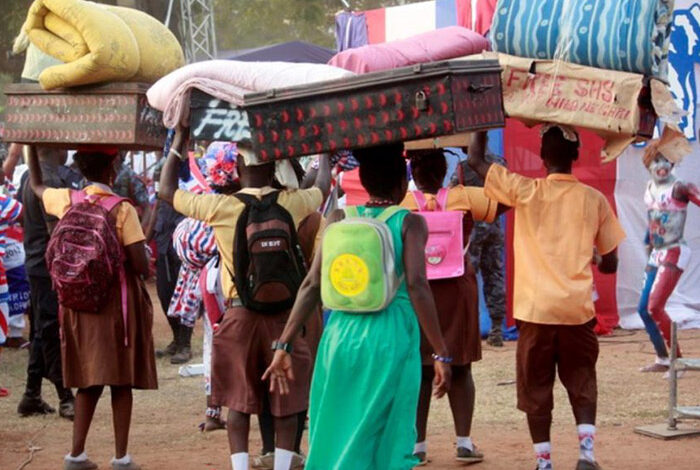
Key Takeaways
- Ghana Education Service confirms the Free Senior High School programme remains active.
- No official directive requires parents to pay GH¢1,500 for chop boxes, trunks or related items.
- Reports of cancellation stem from unverified social‑media posts.
- The policy continues to fund secondary education for eligible students nationwide.
The Ghana Education Service issued a formal statement to dispel circulating rumors that the Free SHS initiative had been terminated and that parents were being asked to contribute GH¢1,500 for school supplies. The clarification was released after multiple online posts suggested a policy reversal.
The clarification arrives amid heightened public scrutiny of education financing and follows a series of unverified claims shared across digital platforms.
Background & Context
Launched in 2017, the Free Senior High School policy aimed to eliminate cost barriers for secondary education, enrolling millions of students from diverse socioeconomic backgrounds. Funding is sourced from the national budget, with supplemental support from development partners, reflecting a long‑term commitment to universal education.
Since its inception, the programme has faced challenges, including infrastructure strain, teacher shortages, and periodic budgetary debates. Nevertheless, it remains a cornerstone of Ghana’s development agenda, contributing to improved enrollment rates and gender parity in secondary schools.
Official Clarification
The Ghana Education Service explicitly stated that the Director‑General has neither cancelled the Free SHS policy nor issued any directive obligating parents to pay for chop boxes, trunks, or related items. The statement underscored that any such financial demand would contravene existing regulations governing free education.
GES also highlighted that the alleged payment figure of GH¢1,500 lacks any legal basis and is not reflected in official communications. The agency urged the public to rely on verified sources and to report misinformation that could undermine confidence in public programs.
Implications for Stakeholders
For students and families, the reaffirmation safeguards continued access to secondary education without additional financial burdens. It also reinforces the government’s pledge to uphold the policy’s equity objectives, particularly for vulnerable communities.
Educators and school administrators gain clarity on budget allocations, allowing them to focus on instructional quality rather than addressing unfounded payment concerns. Policy analysts view the incident as a reminder of the rapid spread of misinformation in the digital age and its potential to destabilize public trust.
Looking Ahead
GES plans to intensify communication efforts, including targeted outreach through radio, community meetings, and official social‑media channels, to preempt future rumors. Continuous monitoring of public discourse will be paired with rapid response mechanisms to address inaccuracies.
Long‑term, the Ministry of Education is reviewing monitoring frameworks to ensure transparent reporting on Free SHS expenditures, thereby reinforcing accountability and sustaining the programme’s impact on national human capital development.



0 Comments
Leave a Comment
No comments yet. Be the first to share your thoughts!