
Key Takeaways
- President Mahama praised Minister Ofosu-Adjare for hands-on engagement with manufacturers.
- The ministry was renamed to include agribusiness and industry, expanding its mandate.
- Policy adjustments such as extending export-proceeds repatriation to 90 days aim to ease operational constraints.
- Kasapreko’s IPO and expansion illustrate the potential of Ghanaian-owned firms under the new framework.
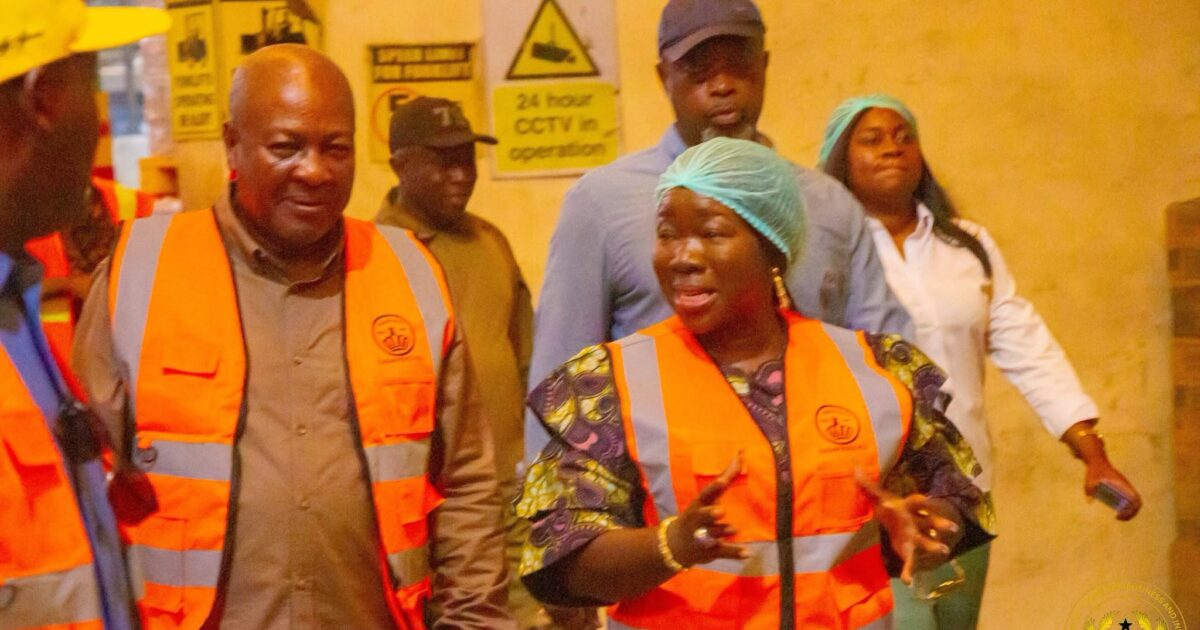
On October 8, 2026, former President John Dramani Mahama visited the Kasapreko Plc plant in Accra and highlighted the role of Trade, Agribusiness and Industry Minister Elizabeth Ofosu-Adjare in reshaping Ghana’s manufacturing landscape. The visit underscored a broader governmental push to integrate industrial concerns directly into trade policy.
Mahama’s remarks linked the ministry’s recent rebranding to a strategic effort to give industry a stronger voice in policy formulation, a move intended to accelerate the country’s target of raising manufacturing’s share of GDP to 15 percent by 2030.
Background & Context
Ghana’s industrial sector has long grappled with infrastructural bottlenecks, including unreliable power, water scarcity, and cumbersome land acquisition processes. Previous trade-focused ministries addressed market access but often overlooked the production side, leaving manufacturers to navigate challenges with limited governmental advocacy.
The decision to rename the Ministry of Trade as the Ministry of Trade, Agribusiness and Industry reflects a policy shift that aligns with the “Industrialisation Agenda” outlined in the 2022–2026 Development Plan. By embedding agribusiness and industrial portfolios, the government signals an intention to coordinate supply chains from raw material sourcing to finished-goods export.
Ministerial Initiatives
Since assuming office, Minister Ofosu-Adjare has convened regular forums with private-sector leaders, facilitating rapid identification of operational obstacles. Notable interventions include coordinated water-supply agreements with Ghana Water Company, expedited land-allocation protocols for new factories, and a temporary extension of export-proceeds repatriation from 60 to 90 days. The latter measure directly addresses cash-flow constraints that have limited small- and medium-size exporters.
In addition to infrastructural relief, the minister has championed regulatory reforms that streamline cross-border trade procedures. By reducing customs clearance times and harmonising standards with regional partners, Ghana aims to position itself as a manufacturing hub for the Economic Community of West African States (ECOWAS).
Industry Response
Kasapreko Plc’s chief executive, Richard Adjei, cited the minister’s responsiveness to water, power, and trade-related complaints as a catalyst for the company’s recent expansion. The firm’s successful GH₵1.72 billion initial public offering earlier in 2026 and subsequent listing on the Ghana Stock Exchange exemplify the confidence that private investors place in a more supportive policy environment.
Other manufacturers have reported similar benefits, noting that direct ministerial contact reduces bureaucratic lag and provides clearer pathways for capital investment. The collective feedback suggests that the new ministry structure is beginning to translate policy intent into tangible operational improvements.
Looking Ahead
Achieving the 15 percent manufacturing contribution target will require sustained investment in energy reliability, skilled labour development, and export-market diversification. The ministry’s expanded mandate positions it to coordinate these elements, but long-term success will depend on consistent funding and measurable performance metrics.
Future assessments will likely focus on whether the extended export-proceeds window and infrastructure reforms translate into increased export volumes and higher-value production. Continued dialogue between government and industry, as exemplified by the Kasapreko visit, will remain a critical component of Ghana’s industrial transformation.
0 Comments
Leave a Comment
No comments yet. Be the first to share your thoughts!