
Key Takeaways
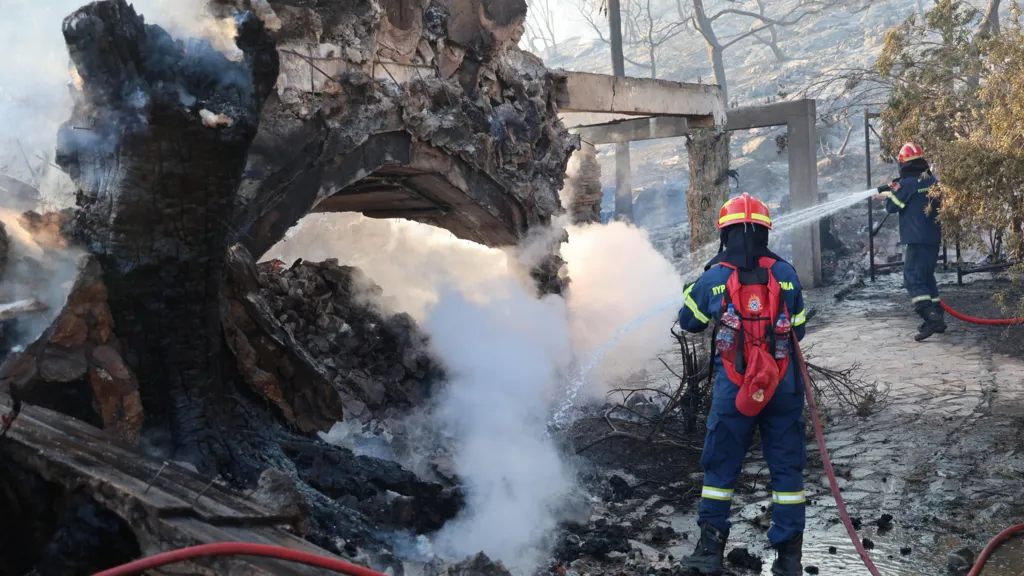
- Two fires broke out on the Greek island of Salamina, killing at least two people and forcing hundreds to evacuate.
- Over 360 people have been evacuated by sea, with numerous aircraft and 50 fire engines deployed to combat the blazes.
- The fires, which occurred almost simultaneously, have spread rapidly due to high winds, causing widespread destruction on the island.
- The operation is being assisted by water tankers and construction machinery, with firefighters working tirelessly to prevent the fires from merging.
The Greek island of Salamina, located just west of Athens, has been hit by twin fires, resulting in at least two deaths and the evacuation of hundreds of residents. The blazes, which broke out on Sunday, have spread rapidly due to high winds, causing widespread destruction on the island.
According to fire officials, the first fire was reported at 14:40 local time (11:40 GMT) near the island's south coast and spread rapidly, followed by the second some 20 minutes later in the east. The fires have been fueled by strong winds, making it challenging for firefighters to contain the blaze.
Background & Context
Salamina, with a population of over 37,000 residents, many of whom are elderly, has been under a high wildfire risk on Sunday. The island has a mix of residential and forested areas, making it prone to wildfires. The situation has been exacerbated by the strong winds, which have spread the fires rapidly.
The fires on Salamina are the latest in a series of wildfires that have swept across Europe this weekend. In Belgium, firefighters have been battling a massive wildfire in the Hautes Fagnes nature reserve, which has more than doubled in size in 24 hours. In Croatia, at least one person died and dozens were injured in a wildfire that tore through the coastline overnight on Friday.
Key Findings
At least two people have been confirmed dead, with four others taken to a local health centre with burns. The fires have forced over 360 people to evacuate by sea, with numerous aircraft and 50 fire engines deployed to combat the blazes. The operation is being assisted by water tankers and construction machinery.
The fires have spread rapidly, with firefighters working tirelessly to prevent them from merging. The situation has been complicated by the strong winds, which have made it challenging for firefighters to contain the blaze.
Broader Implications
The wildfires on Salamina and across Europe have raised concerns about the impact of climate change on wildfires. Rising temperatures and changing weather patterns have made it more challenging for firefighters to contain blazes, leading to widespread destruction and loss of life.
The situation has also highlighted the need for effective wildfire management strategies, including the creation of firebreaks and the deployment of firefighting resources. The European Union has been working to strengthen its wildfire response capabilities, including the development of a European Union Firefighting Force.
Looking Ahead
Firefighters are working tirelessly to contain the blazes and prevent them from merging. The operation is being assisted by water tankers and construction machinery, with numerous aircraft and 50 fire engines deployed to combat the blazes.
The situation on Salamina and across Europe is a stark reminder of the need for effective wildfire management strategies and the importance of addressing the root causes of wildfires, including climate change. The European Union and national governments must work together to strengthen their wildfire response capabilities and protect lives and property.





0 Comments
Leave a Comment
No comments yet. Be the first to share your thoughts!