
Key Takeaways
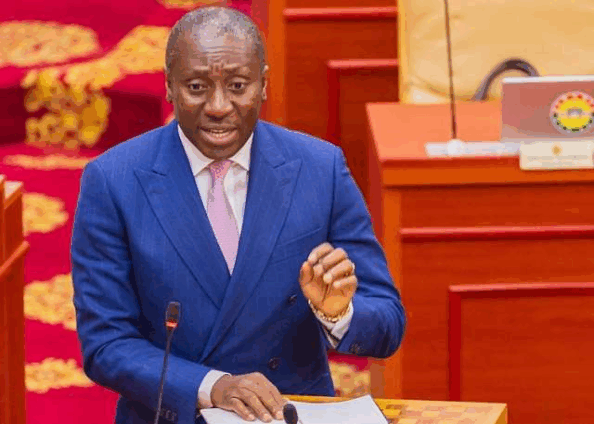
- Minority Leader Alexander Afenyo‑Markin accuses the government of using investigations to intimidate opposition MPs.
- He warns that unchecked intimidation could become a reciprocal tool if the New Patriotic Party returns to power.
- Afenyo‑Markin calls for accountability that respects parliamentary freedom and a focus on delivering policy outcomes.
During a televised interview on Joy News’ The Probe, the minority leader of Ghana’s parliament warned that the current administration’s reliance on investigative agencies to silence dissent could seed a cycle of retaliatory politics. He cited personal experiences of colleagues who felt pressured by security services after raising parliamentary questions.
The remarks came amid a broader debate over the role of the Bureau of National Investigations and the balance between legitimate anti‑corruption efforts and political overreach. While acknowledging the necessity of accountability, Afenyo‑Markin stressed that it must not become a weapon against legitimate legislative work.
Background & Context
Ghana’s Fourth Republic has long prided itself on a competitive multiparty system, with the National Democratic Congress and the New Patriotic Party alternating in power. Recent years have seen heightened scrutiny of public officials, driven by civil society demands for transparency and a series of high‑profile corruption scandals.
At the same time, the political climate has grown increasingly polarized. The ruling party’s control of key security agencies has raised concerns among opposition figures that investigative powers could be deployed selectively, a sentiment echoed in parliamentary debates and media commentary.
Accusations of Intimidation
Afenyo‑Markin described specific instances where members of his caucus faced investigations that, in his view, were rooted in “mere allegations” rather than substantive evidence. He recounted a colleague’s claim that a call from the BNI followed a vigorous floor debate, suggesting a pattern of punitive surveillance.
Although he declined to name the individuals, the pattern he outlined aligns with earlier reports of opposition MPs receiving summonses shortly after questioning government policy. The minority leader emphasized that such tactics erode the confidence necessary for robust parliamentary oversight.
Implications for Ghanaian Democracy
If investigative tools are perceived as partisan, the risk extends beyond individual careers to the credibility of democratic institutions. Scholars of African governance warn that the politicization of security agencies can entrench a culture of mutual retaliation, undermining the rule of law.
In this scenario, future administrations—regardless of party affiliation—might adopt the same approach, turning accountability into a two‑sided sword. The warning from the minority leader therefore serves as a cautionary note for any government seeking to maintain legitimacy while pursuing anti‑corruption agendas.
Looking Ahead
The immediate challenge for the government is to demonstrate that investigations are conducted on an impartial basis, with clear procedural safeguards. Strengthening parliamentary immunity provisions and establishing an independent oversight body for investigative agencies could mitigate perceptions of bias.
Long‑term stability will depend on a political culture that separates legitimate scrutiny from intimidation, allowing elected officials to focus on policy delivery rather than personal security concerns.





0 Comments
Leave a Comment
No comments yet. Be the first to share your thoughts!