
Key Takeaways
- MTN Ghana commits GH¢20 million to support Ghanaians returning from South Africa.
- The fund moves beyond emergency aid toward sustainable reintegration.
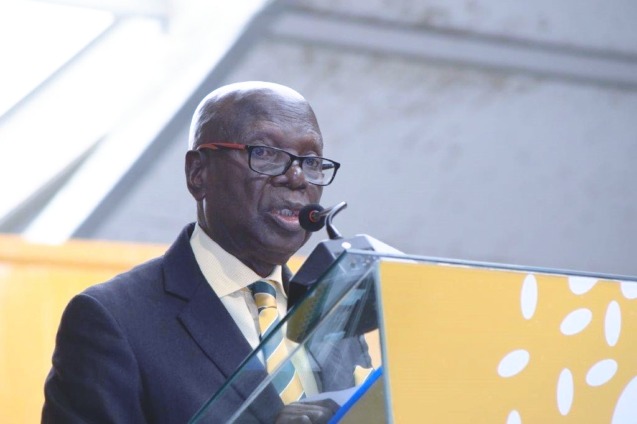
- Board Chairman Dr Ishmael Yamson cited delayed liaison with the Ministry of Foreign Affairs.
- The measure follows xenophobic attacks that have killed two Ghanaian nationals.
Renewed xenophobic violence in South Africa has forced a wave of Ghanaian migrants to flee back home, prompting a corporate intervention that exceeds typical charitable gestures. MTN Ghana announced a two‑phase, GH¢20 million package designed to help returnees reconstruct livelihoods rather than merely survive the immediate crisis.
The announcement, made on Joy News’ PM Express, highlighted a strategic shift from a short‑term welcome‑back grant to a longer‑term fund that addresses housing, education, and small‑business start‑ups. The move reflects growing expectations that large private entities contribute to social resilience in the face of cross‑border instability.
Corporate Response and Funding Strategy
Initially, MTN Ghana set aside GH¢10 million for immediate assistance, a sum intended to cover data bundles, communication tools, and basic necessities. Board Chairman Dr Ishmael Yamson later explained that the board recognized the limited impact of one‑off aid, prompting the addition of another GH¢10 million to create a dedicated reintegration fund.
The expanded fund will be managed by a cross‑functional team within MTN, with allocations earmarked for vocational training, micro‑credit schemes, and counseling services. By embedding the program within the company’s corporate‑social‑responsibility framework, MTN aims to generate measurable outcomes that can be reported to stakeholders and regulators.
Stakeholder analysts note that the approach mirrors best practices in disaster‑response financing, where multi‑year commitments outperform ad‑hoc disbursements. The transparency of the fund’s governance will be crucial for maintaining public trust and ensuring that resources reach the most vulnerable returnees.
Xenophobic Violence in South Africa: Roots and Recent Escalation
South Africa’s xenophobic outbreaks trace back to economic competition, unemployment, and politicised rhetoric that scapegoats foreign workers. The latest surge, triggered by rumors of job displacement, has targeted migrants from across the continent, including a significant Ghanaian community that has long contributed to informal sectors.
Human‑rights groups report that the attacks have resulted in property destruction, physical assaults, and, in two documented cases, fatalities among Ghanaian nationals. The Ghanaian government has coordinated evacuations and diplomatic outreach, yet the rapid escalation underscores systemic gaps in regional migration management.
Scholars argue that sustainable solutions require bilateral cooperation, improved law‑enforcement training, and community‑level dialogue to dismantle the narratives that fuel hostility. The current crisis offers a stark reminder that migration policies must be resilient to sudden spikes in social tension.
Implications for Ghana’s Diaspora and Government Policy
The return of hundreds of Ghanaian workers poses reintegration challenges that extend beyond immediate financial relief. Housing shortages, limited access to credit, and the psychological toll of trauma demand coordinated interventions from both the state and private sector.
Ghana’s Ministry of Foreign Affairs, while engaged in consular assistance, has yet to formalise a national reintegration blueprint. Dr Yamson’s admission of delayed engagement highlights a broader need for pre‑emptive protocols that align corporate aid with governmental support structures.
Policy experts suggest that a joint task force could streamline resource allocation, monitor outcomes, and adjust strategies in real time. Such mechanisms would also enable the diaspora to contribute to development projects in their home regions, turning forced migration into a catalyst for economic diversification.
Looking Ahead
MTN Ghana’s fund is slated for rollout within the next quarter, with quarterly impact reports planned for public release. The company’s willingness to expand its budget signals a growing corporate acknowledgment of transnational social responsibility.
Future success will hinge on effective collaboration between MTN, the Ministry of Foreign Affairs, and civil‑society organisations. If the initiative achieves measurable improvements in employment and wellbeing for returnees, it could set a precedent for other multinational firms operating in volatile migration corridors.






0 Comments
Leave a Comment
No comments yet. Be the first to share your thoughts!