
Key Takeaways
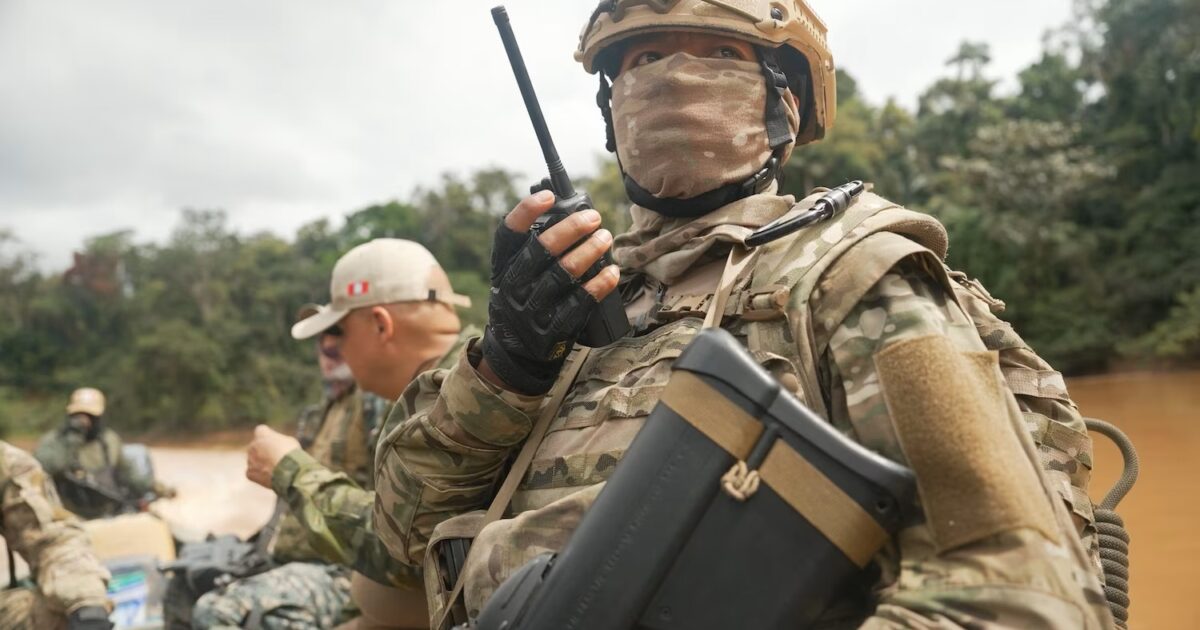
- The Peruvian military launched Operation Mercury 2 to combat illegal gold mining in the Amazon, targeting camps in Tambopata National Park.
- The operation is a sequel to a 2019 campaign that temporarily reduced mining but ultimately saw a resurgence.
- The global rise in gold prices has made extracting even small amounts of gold increasingly lucrative, driving deforestation and environmental degradation in the Amazon.
The Peruvian Amazon has become a hotspot for illegal gold mining, with the military launching a major operation to combat the issue. Operation Mercury 2, which began this week, targeted gold mining camps in Tambopata National Park, a protected area home to a rich rainforest and visited by thousands of tourists each year.
The operation comes as the global price of gold has more than tripled since 2019, rising from an average of $1,394 an ounce to roughly $4,395 an ounce today. This surge in price has made extracting even small amounts of gold increasingly lucrative, driving deforestation and environmental degradation in the Amazon.
Background & Context
Gold mining has ravaged large parts of the Amazon, spanning multiple countries including Ecuador, Brazil, Colombia, and Peru. The Amazon is home to six endangered national parks in Peru, where illegal mining is destroying hundreds of square miles of federally protected areas.
The Peruvian government has launched several initiatives to combat illegal mining, including the first Operation Mercury in 2019. However, the operation proved to be temporarily effective, with a 90% drop in mining that eventually grew back to surpass previous numbers.
Key Findings
According to the Monitoring of the Andes Amazon Program (MAAP), gold mining has destroyed nearly 344,000 acres of the Peruvian Amazon by mid-2025, with 97.5% of that deforestation in Madre de Dios.
A 2021 study of communities in Madre de Dios found that 71% of people living within mining communities and 80% of people living outside mining communities had hair-mercury concentrations above the U.S. EPA reference level.
Broad Implications
The environmental footprint of gold mining has become enormous, with the mercury used in the process poisoning communities and destroying landscapes. The mines themselves trample landscapes, while the mercury used in the process is poisoning communities.
Tambopata National Park is just one of six endangered national parks in Peru where illegal mining is destroying hundreds of square miles of federally protected areas – many are UNESCO World Heritage sites.
Looking Ahead
The Peruvian government has partnered with Global Conservation to fund Operation Mercury 2, a multi-agency effort to prevent the return of illegal gold miners. The operation is being partly funded by Global Conservation, an international nature conservation group whose mission is the direct protection of endangered national parks and indigenous territories in developing countries.
The operation is a significant step towards combating illegal gold mining in the Amazon, and highlights the need for a long-term, multi-agency approach to protect the region's environment and communities.






0 Comments
Leave a Comment
No comments yet. Be the first to share your thoughts!