
Key Takeaways
- Spain will impose border controls on all air and sea travel from Italy for a month.
- The measures come in response to Italy's suspension of the Schengen agreement for third-country nationals arriving from Spain.
- The migrant crisis has pitted Spain's socialist leader Pedro Sanchez against Italy's conservative leader Giorgia Meloni.
- Italy has accused Spain of failing to stem the flow of migrants to the Spanish exclave of Ceuta.
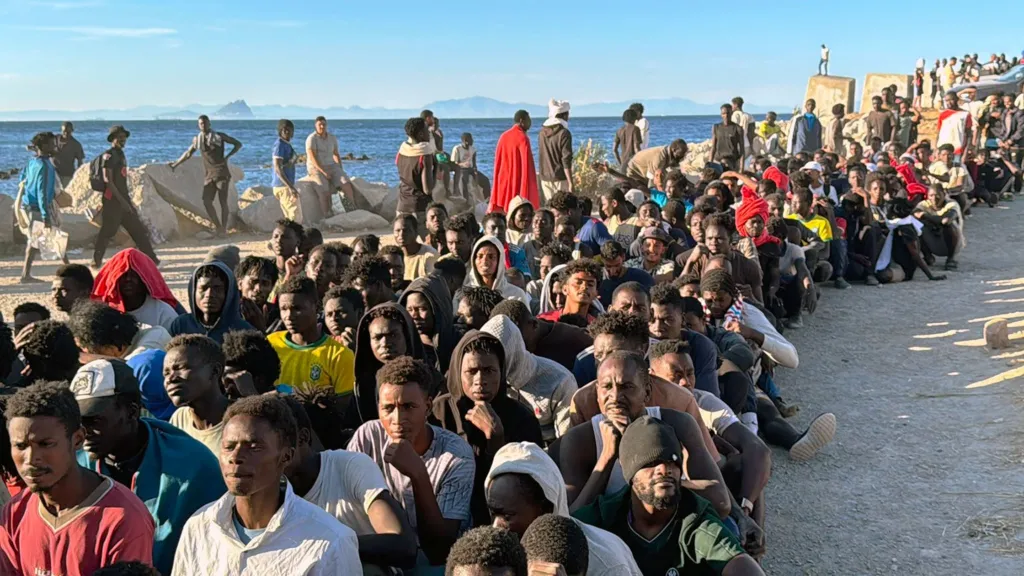
Spain has announced it will impose border controls on all air and sea travel from Italy in a move aimed at countering the recent influx of migrants to the Spanish exclave of Ceuta. The measures, which will come into force at midnight and last for a month, are a response to Italy's decision to suspend the Schengen agreement for third-country nationals arriving from Spain.
The crisis has deepened the rift between Spain and Italy, with both countries accusing each other of failing to address the root causes of the migrant influx. Spain's socialist leader Pedro Sanchez has called on Italy to reverse its decision to suspend the Schengen agreement, while Italy's conservative leader Giorgia Meloni has accused Spain of failing to stem the flow of migrants to Ceuta.
Background & Context
The migrant crisis in Spain has its roots in the country's long-standing controversy over the Spanish exclave of Ceuta, which is claimed by Morocco. The two countries have a complex history, with Morocco not recognizing Spanish sovereignty over Ceuta and Melilla, another Spanish exclave on the northern coast of Africa. The dispute has led to a series of diplomatic tensions and border clashes over the years.
Spain's decision to impose border controls on Italy comes in response to Italy's suspension of the Schengen agreement for third-country nationals arriving from Spain. Italy's decision was backed by Finland and Denmark, while the Czech Republic called for Spain's membership to be temporarily suspended. The move has raised concerns about the effectiveness of the Schengen area, which allows for passport-free travel between member states.
Key Findings
Recent data has revealed that nearly 1,400 minors, some of them 'very young boys and girls', remain in Ceuta after the migrant influx. The Spanish government has not announced an anticipated second wave of crossings from Morocco, despite reports of social media activity by Moroccan users planning another attempt. The EU's Migration Commissioner Magnus Brunner has suggested that criminal networks spreading disinformation were to blame for the migrant influx.
Spain's Supreme Court has ruled that migrants stopped at sea while trying to reach Ceuta or Melilla cannot be summarily returned to Morocco. Morocco has laid blame for the crisis on the court, with an unnamed government source briefing local outlets that 'the deterrent element of the system collapsed and the dam gave way, not under the weight of the criminals, but of a judge's decision'.
Broader Implications
The migrant crisis in Spain has far-reaching implications for the European Union, highlighting the need for a more coordinated approach to migration and border control. The crisis has also raised questions about the effectiveness of the Schengen area and the need for stronger border controls. The EU's Migration Commissioner Magnus Brunner has called for greater cooperation between member states to address the root causes of migration.
The crisis has also raised concerns about the treatment of migrants in Europe, with reports of long queues and waiting times at airport terminals. Italian officials have said that local authorities carrying out checks do 'everything possible' to ensure maximum comfort for both Spanish and other European citizens arriving in Italy from Spain.
Looking Ahead
The migrant crisis in Spain is expected to continue in the coming weeks, with Spain's government monitoring the situation closely. The crisis has raised questions about the future of the Schengen area and the need for stronger border controls. The EU's Migration Commissioner Magnus Brunner has called for greater cooperation between member states to address the root causes of migration.
As the situation unfolds, it remains to be seen how Spain and Italy will address the migrant crisis and find a solution that works for both countries. The crisis has highlighted the need for a more coordinated approach to migration and border control, and the EU is likely to play a key role in finding a solution.






0 Comments
Leave a Comment
No comments yet. Be the first to share your thoughts!