
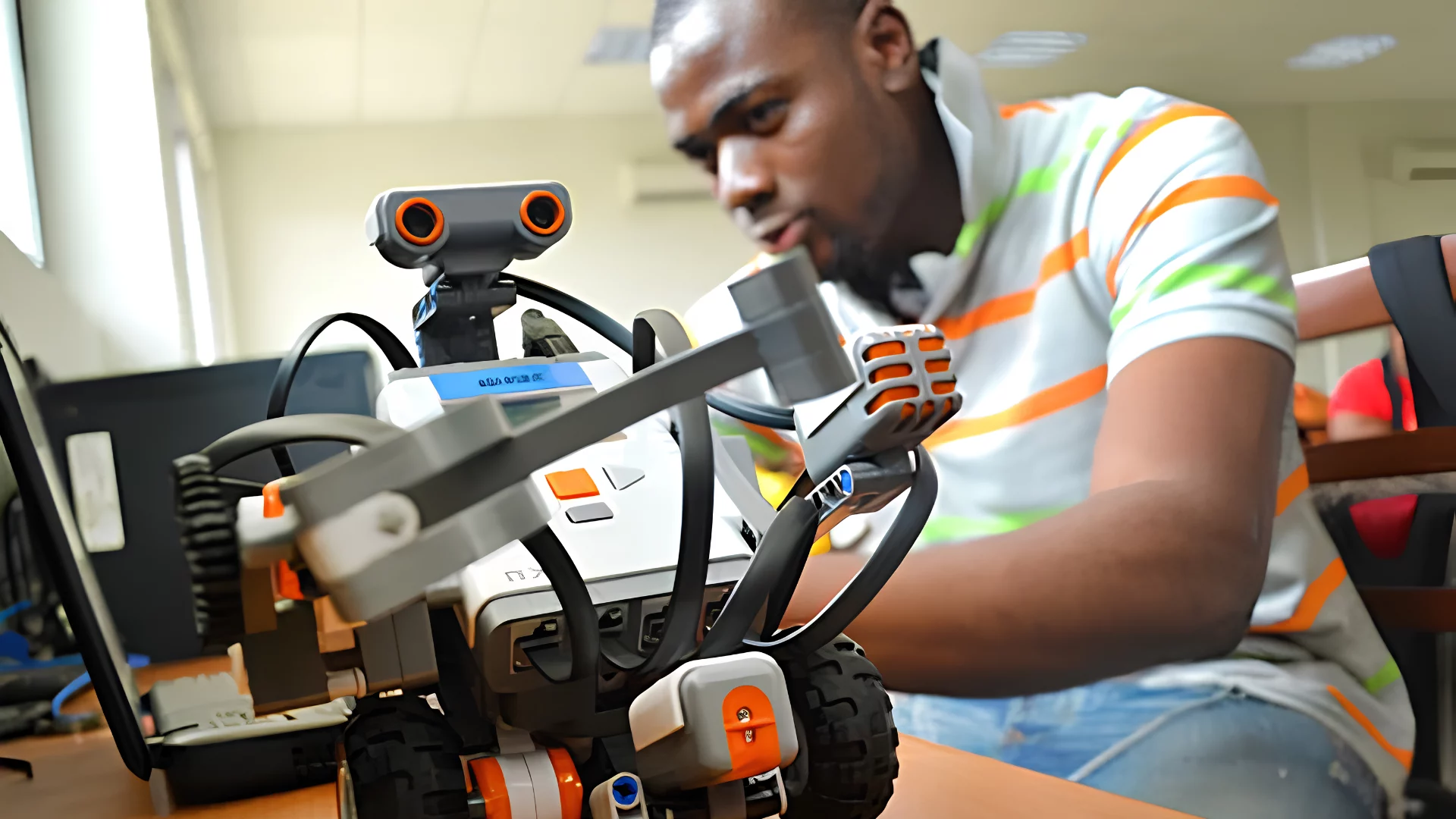
Terra Industries, a Nigerian defence‑technology startup founded in 2024 by Nathan Nwachuku and Maxwell Maduka, has become one of the most recognisable names in Africa’s deep‑tech sector after closing a $52 million seed round in August – the continent’s largest seed‑stage funding to date.
The company designs autonomous drones, sentry towers and crewless ground vehicles that operate on its proprietary ArtemisOS platform. Its rapid rise illustrates what can happen when investors, capital and a supportive ecosystem converge on hardware‑intensive ventures.
Systemic constraints on African deep‑tech
According to the United Nations Development Programme, deep‑tech relies on scientific discoveries and intensive R&D, covering fields such as robotics, semiconductors, biotechnology and certain forms of artificial intelligence. In Africa, most tech firms apply existing hardware rather than develop it. A 2021 study by the Nigerian Communications Commission found that 84 % of hardware components used in the country’s telecom sector are imported, exposing local developers to high shipping costs, foreign‑exchange volatility and customs duties.
“The hardware folks would tell you there’s a lot of support they need that they haven’t necessarily seen. For example, like policies around the amount of money they pay to bring in components to build stuff in the country,” said Chukwuemeka Afigbo, convener of the Africa Deep Tech Foundation.
Continental capacity remains limited: the African Academy of Sciences reports less than 1 % of global semiconductor output comes from Africa, and the region holds only 0.6 % of worldwide data‑centre capacity. Funding is also uneven; while African startups raised $3.42 billion in 2025, deep‑tech deals accounted for about $3 billion of that total across 360 transactions since 2013.
Building an ecosystem for hardware innovators
The Africa Deep Tech Foundation, now a network of more than 5,000 members and about 200 active practitioners, organises incubation programmes and advocacy for early‑stage founders. Other firms are filling niche gaps: ChipMango trains talent in chip design, Signvrse creates AI‑powered sign‑language avatars, and NovFeed converts organic waste into high‑protein fish feed.
“Yes, there is government awareness and interest, but still relatively nascent,” Afigbo said. “A lot of good things are happening, but we need 10 times more than that to happen. It’s a journey.”
Policy focus has skewed toward artificial intelligence, with national AI strategies launched in Nigeria, Kenya, Egypt and South Africa since 2025. Observers warn that an AI‑centric agenda may overlook the physical‑infrastructure needs of broader deep‑tech, such as specialised manufacturing, research labs and supply‑chain support.
Terra’s $52 million seed round demonstrates that global investors are willing to back African companies that can deliver sophisticated physical technology. Whether the startup remains an outlier or signals the start of a larger movement will depend on how quickly the continent can address import costs, talent pipelines and policy gaps that currently make hardware development more capital‑intensive than software.


0 Comments
Leave a Comment
No comments yet. Be the first to share your thoughts!