
Key Takeaways
- UG will issue certificates bearing its seal to AUCB Level 400 students admitted in the 2022/23 academic year who satisfy all academic requirements.
- The affiliation agreement signed between UG and AUCC (now AUCB) remains operative throughout the students’ programmes.
- Students welcomed the clarification, noting it upholds the contractual expectations set at admission.
- The Ghana Tertiary Education Commission is expected to review the petition, but certification will follow UG’s directive.
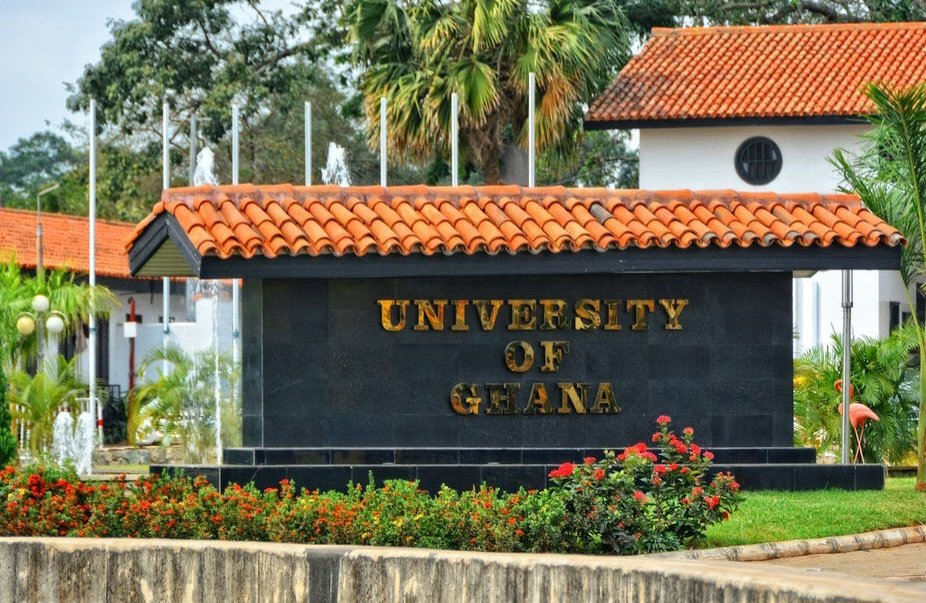
The University of Ghana issued a formal clarification after a petition from final‑year students of the African University of Communication and Business (AUCB) raised doubts about the legitimacy of their forthcoming degree certificates. The petition, lodged by Level 400 students who entered the institution under an affiliation with UG during the 2022/23 session, sought assurance that their qualifications would bear the University of Ghana’s seal.
In a letter signed by Pro Vice‑Chancellor for Academic and Student Affairs Professor Gordon A. Awandare, UG affirmed that the affiliation terms continue to govern the cohort, guaranteeing eligibility for certificates under the UG seal provided all academic criteria are met.
Affiliation Framework and Historical Context
Affiliation arrangements have long been a feature of Ghana’s tertiary sector, allowing private colleges to deliver programmes validated by established public universities. The partnership between UG and the then African University College of Communications was formalised in the early 2010s, enabling the college to offer accredited degrees while leveraging UG’s academic standards and quality assurance mechanisms.
In 2022 the college rebranded as the African University of Communication and Business, but the original affiliation agreement remained in effect for students already enrolled. Such continuity is typical in Ghanaian higher education, where contractual obligations are preserved to protect student rights and maintain institutional credibility.
University of Ghana’s Position and Official Response
The university’s response emphasized that the affiliation agreement “governs the terms and conditions of the programme throughout its duration.” By reiterating that the seal of UG will appear on certificates for the affected cohort, UG reinforced its commitment to uphold the contractual expectations set at the point of admission.
Professor Awandare’s statement also clarified that no special concession is required; the entitlement arises automatically from the original agreement. This distinction matters because it separates the students’ claim from any ad‑hoc policy change, anchoring it firmly in the legally binding affiliation contract.
Implications for Students and the Higher‑Education Landscape
The clarification provides immediate reassurance to the cohort, whose academic records, examinations and institutional processes were conducted under UG’s oversight. It also signals to other private institutions the importance of transparent affiliation terms, especially when rebranding or restructuring occurs.
For the broader sector, the episode underscores the role of the Ghana Tertiary Education Commission as an arbiter of affiliation disputes. While UG has taken a definitive stance, GTEC’s forthcoming review will likely set precedent for how similar cases are handled, influencing policy on certificate issuance and student protection.
Looking Ahead
Students are urged to remain united while awaiting GTEC’s final assessment, a step that may formalise the university’s clarification into regulatory guidance. The outcome will shape not only the immediate certification timeline but also future affiliation agreements across Ghana’s higher‑education ecosystem.
Stakeholders anticipate that the resolution will reinforce confidence in collaborative degree programmes, ensuring that graduates receive credentials that reflect both the teaching institution and the accrediting university.






0 Comments
Leave a Comment
No comments yet. Be the first to share your thoughts!