
Key Takeaways
- Personal criminal liability proposed for officials who sign development permits in protected wetlands, watercourses, drainage channels and forest reserves.
- Liability would remain enforceable after an official leaves office, similar to fraud statutes.
- The measure targets unchecked development that has narrowed drainage basins and intensified flooding in Greater Accra.
- Excluding forest reserves and water bodies from the mining licensing regime would eliminate ministerial discretion.
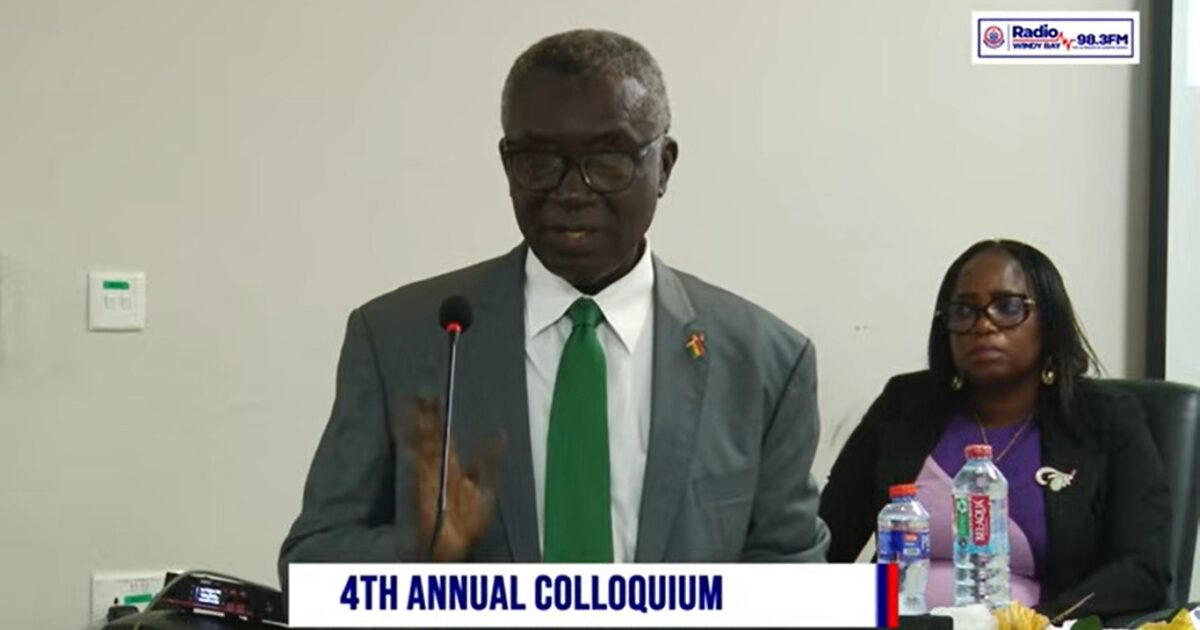
During the keynote address at the Fourth Annual Colloquium of the Department of Political Science Education at the University of Education, Winneba, former Minister for Environment, Science, Technology and Innovation Prof Kwabena Frimpong‑Boateng outlined a legal reform aimed at strengthening environmental governance in Ghana. He argued that the current institutional shield prevents individual accountability when permits are issued for projects in protected areas.
The proposal seeks to criminalise the act of signing such permits, thereby attaching personal responsibility to the decision‑maker rather than to the agency. Frimpong‑Boateng emphasized that the approach would function as a deterrent and a tool for safeguarding the nation’s ecological assets.
Background and Legislative Gap
Ghana’s land‑use planning framework presently treats the issuance of development permits as an institutional act, insulating individual officials from prosecution. This legal architecture has allowed projects to proceed in gazetted wetlands and drainage reserves without direct personal consequences for the signatories.
Historical incidents, notably the June 3 2015 flood and fire disaster in Accra that claimed more than 150 lives, illustrate the human cost of permissive planning. Investigations linked the tragedy to a development permit that altered natural water pathways, yet no individual faced criminal charges.
Proposed Accountability Mechanism
Frimpong‑Boateng’s model would codify the signing of a permit for a protected area as a specific offence. The statute would apply regardless of the official’s tenure, ensuring that liability persists after the individual leaves office, mirroring the treatment of fraud offences.
By attaching a name to each permit decision, the reform aims to create a clear chain of responsibility. Officials would be required to assess environmental impact rigorously, knowing that personal imprisonment could result from non‑compliance.
Implications for Urban Flood Management
Greater Accra’s nine drainage basins have been progressively encroached upon, with sections of the Korle Lagoon and the Densu Delta already occupied by development projects. The reduction of natural waterways limits rainwater absorption, converting ordinary precipitation into flash floods.
If the proposed liability regime is enacted, developers would encounter heightened scrutiny before receiving approvals, potentially preserving the integrity of drainage corridors. Over time, this could reduce the frequency and severity of flood events that have become a recurrent public safety issue.
Looking Ahead
The recommendation will now enter parliamentary debate, where legal experts and environmental advocates are expected to weigh its feasibility and potential unintended consequences. Successful passage could set a precedent for personal accountability in other sectors of public administration.
Long‑term monitoring will be essential to gauge whether the deterrent effect translates into measurable improvements in wetland protection, flood mitigation, and overall environmental resilience across Ghana.



0 Comments
Leave a Comment
No comments yet. Be the first to share your thoughts!