
Key Takeaways
- 95% of senior‑high school applicants placed through automatic and self‑placement combined.
- Automatic placements reached 527,000, up from 483,000 in 2025.
- Self‑placement applications fell to 53,000, half of the previous year.
- Available seats exceed demand, with roughly 800,000 spaces for 600,000 students.
The Ghana Education Service (GES) announced that the Computerised School Selection and Placement System (CSSPS) has successfully placed about 95% of students seeking senior‑high admission. The figures, released by GES Public Relations Officer Daniel Fenyi, counter reports of a nationwide placement crisis.
Automatic placements accounted for roughly 87% of total assignments, while self‑placement covered the remaining 13%. The agency highlighted a sharp decline in self‑placement requests and emphasized that the system has sufficient capacity to accommodate all qualified candidates.
Placement Statistics and Trends
Data released on September 10 show 527,000 students automatically placed, surpassing the 483,000 recorded in 2025 and the 447,000 in 2024. The upward trajectory reflects refinements in the algorithm that matches applicants to available schools.
Self‑placement applications dropped from 107,000 last year to 53,000, indicating greater confidence in the automated process. When combined, the two mechanisms place between 93% and 95% of applicants, a rate GES describes as far from a crisis.
System Improvements and Operational Capacity
GES officials attribute the gains to enhancements in data verification, real‑time capacity monitoring, and streamlined communication with schools. The service maintains an inventory of approximately 800,000 seats, comfortably exceeding the 600,000‑plus applicants.
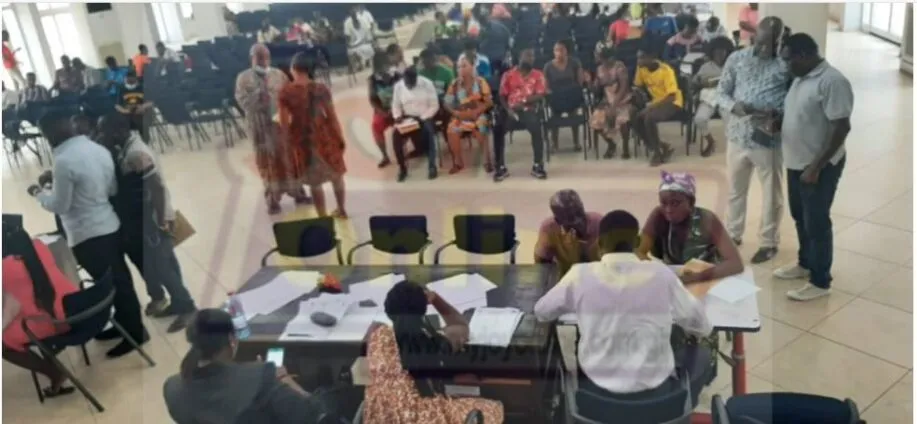
Seventeen resolution centres nationwide address technical glitches and individual placement disputes. Fifteen centres are reported to be operating without major issues, with only the Accra and Ashanti centres experiencing heightened activity due to population density.
Public Perception and Regional Pressures
Parents in Accra and the Ashanti Region have voiced frustration over queue lengths at resolution centres, prompting media coverage that amplified concerns of a systemic failure. Fenyi cautioned against extrapolating localized pressure to a national emergency, noting that Accra’s volume does not represent the country as a whole.
Stakeholders are urged to consider the broader statistical context rather than isolated incidents. The agency continues to process pending cases and assures that the remaining unplaced students will be accommodated through the existing seat surplus.
Looking Ahead
GES plans to sustain the current placement efficiency by refining the CSSPS interface and expanding outreach to under‑represented regions. Ongoing monitoring will focus on reducing self‑placement reliance and ensuring that resolution centres maintain operational standards.
Future reports will track placement outcomes through the end of the registration period, offering transparency that aims to restore public confidence in Ghana’s senior‑high admission system.





0 Comments
Leave a Comment
No comments yet. Be the first to share your thoughts!