
Key Takeaways
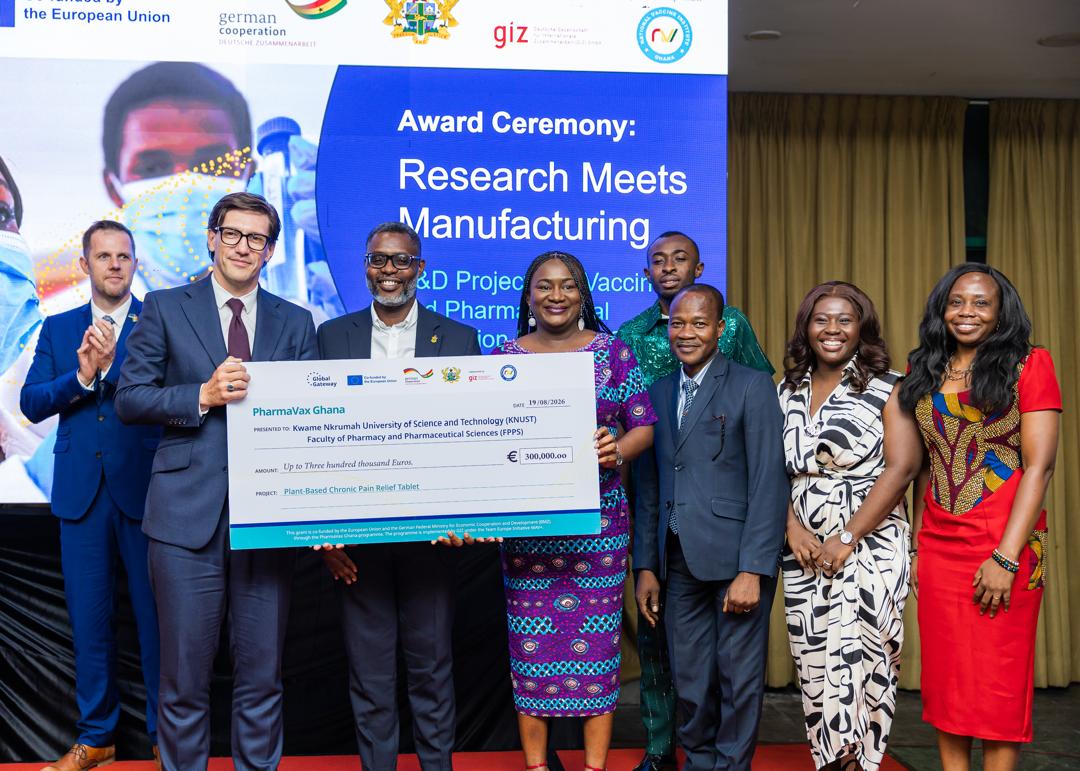
- Ghana’s PharmaVax programme secures German and EU funding to scale a locally sourced herbal pain remedy.
- The project will convert the remedy into a sustained‑release tablet suitable for mass production.
- Industrial‑scale manufacturing will adhere to national regulatory standards, aiming to boost domestic pharmaceutical capacity.
The Ghanaian pharmaceutical sector is poised for a shift as the PharmaVax Ghana Programme moves a traditional herbal analgesic from laboratory benches to factory lines. Backed by the German Federal Ministry for Economic Cooperation and Development and the European Union, the initiative targets both health outcomes and economic diversification.
Stakeholders emphasize that the sustained‑release formulation promises more consistent dosing, reduced side‑effects, and broader market accessibility, positioning Ghana to compete in regional drug supply chains.
Background & Context
Herbal medicine has long been integral to Ghanaian healthcare, yet most preparations remain informal, limiting quality control and scalability. Over the past decade, the government has pursued policies to modernize the sector, encouraging partnerships that blend indigenous knowledge with pharmaceutical science.
The PharmaVax programme builds on these policies, channeling international development funds into research infrastructure. Earlier pilot studies demonstrated the analgesic’s efficacy, prompting the current push toward a tablet that can be manufactured under Good Manufacturing Practice (GMP) conditions.
From Research to Production
Scientists have isolated active compounds from the plant source and engineered a matrix that releases the medication over several hours. Translating this chemistry into a tablet requires precision equipment, validated processes, and rigorous batch testing—capabilities that Ghanaian manufacturers have been cultivating with foreign technical assistance.
The collaborating company will leverage its existing production lines, integrating the new formulation while maintaining compliance with the Food and Drugs Authority’s standards. This alignment aims to eliminate reliance on imported analgesics and reduce the cost burden on the national health system.
Regulatory and Economic Impact
Meeting national regulatory benchmarks ensures that the product can enter the local market without extensive additional approvals, accelerating time‑to‑patient. Moreover, the project creates skilled jobs, from formulation chemists to quality‑assurance auditors, contributing to Ghana’s broader industrialization agenda.
By establishing a repeatable model for scaling indigenous remedies, the programme could inspire similar ventures across therapeutic areas, strengthening the country’s export potential and fostering a resilient supply chain.
Looking Ahead
Commercial rollout is slated for late 2027, contingent on successful pilot batches and regulatory clearance. Continuous monitoring will assess therapeutic outcomes and inform future iterations of the formulation.
Long‑term, the initiative may serve as a template for leveraging traditional knowledge within modern drug development, aligning public health goals with economic growth.






0 Comments
Leave a Comment
No comments yet. Be the first to share your thoughts!