
Key Takeaways
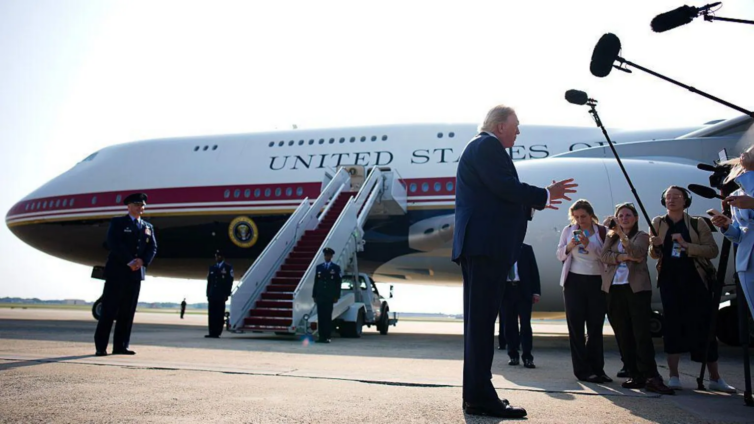
- Seven New York Times journalists were subpoenaed to testify under oath regarding security concerns with President Donald Trump's new Air Force One plane.
- The reporters are required to appear before a federal grand jury investigating potential illegal leaks of classified information.
- The Justice Department maintains that reporters are not the targets of the investigation, but rather those leaking classified information.
The New York Times reported that federal agents delivered subpoenas to some of the newspaper's journalists, demanding they appear before a federal grand jury investigating a potential crime. The paper had published stories alleging that the Qatari-gifted plane was not secure enough, and the Secret Service urged Trump to switch planes on his way home from a NATO summit in Turkey.
The Justice Department told the BBC that it was investigating illegal leaks, adding that "reporters are not the targets, those leaking classified information are." David McCraw, the Times's top newsroom lawyer, called the summons a "brazen act" and "nothing more than an attempt to prevent the public from knowing what is happening in their country by intimidating journalists from doing their jobs."
Background & Context
The controversy surrounding the new Air Force One plane stems from reports that it lacked advanced security features, including antimissile capabilities, when it was first introduced. The Secret Service had urged Trump to switch planes on his way home from a NATO summit in Turkey, citing security concerns.
The incident highlights the delicate balance between national security and freedom of the press. While the Constitution protects the right to a free press, it also emphasizes the importance of maintaining secrecy in certain situations, such as national security matters.
Key Findings
The New York Times reported that while Trump flew to the NATO summit in Turkey on the new Air Force One, he left the summit on an older plane on the advice of the Secret Service. The next day, the newspaper reported that security officials were concerned the newer plane did not have advanced security features, including antimissile capabilities.
The Times also reported that the Qatari government had donated the plane to the US as an "unconditional" gift, valued at an estimated $400m. The Air Force had modified the plane to transport the president and included upgrades in security, mission communications, logistics support, and advanced technology.
Broader Implications
The incident raises questions about the relationship between the government and the press, particularly in cases where national security is at stake. It also highlights the challenges of balancing the need for secrecy with the public's right to know.
The investigation into the potential leaks of classified information underscores the importance of protecting sensitive information and ensuring that those entrusted with it do not share it with unauthorized parties.
Looking Ahead
The outcome of the investigation and the potential consequences for the journalists involved remain uncertain. However, the incident serves as a reminder of the importance of maintaining the integrity of the press and upholding the principles of a free and independent media.
The incident also underscores the need for greater transparency and accountability in government, particularly when it comes to matters of national security. By shedding light on these issues, journalists play a crucial role in ensuring that the public is informed and that those in power are held accountable.




0 Comments
Leave a Comment
No comments yet. Be the first to share your thoughts!