
Key Takeaways
- Speaker Bagbin will admit the Minority’s motion on the Domestic Gold Purchase Programme losses but postpone debate.
- The emergency sitting is restricted to three items specified by President Mahama.
- The claimed GH¢22 billion loss (~US$1.7 billion) will be examined when Parliament resumes normal business.
- Parliament reaffirms its commitment to transparency through the Open Government Partnership.
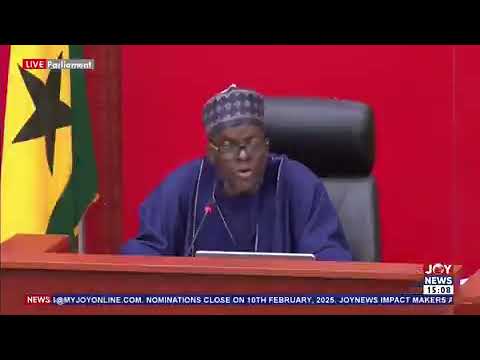
Speaker of Parliament Alban Sumana Kingsford Bagbin announced that the Minority’s request for a parliamentary inquiry into the Domestic Gold Purchase Programme (DGPP) will be admitted, though it will not be debated during the current emergency sitting. The decision follows a motion filed on August 21, 2026, that alleges losses of GH¢22 billion linked to the programme.
Bagbin emphasized that the emergency session, recalled by President John Dramani Mahama, is limited to three predefined matters. Consequently, no new business, including the DGPP motion, can be introduced until Parliament reconvenes for its regular agenda.
Background & Context
The DGPP, launched in 2023, was intended to diversify Ghana’s foreign exchange reserves by purchasing domestic gold for export. Initial reports praised the strategy as a hedge against currency volatility, yet subsequent audits revealed a shortfall that the Minority describes as a loss of GH¢22 billion. The controversy has sparked public debate over fiscal prudence and the governance of state‑owned enterprises such as GoldBod.
Gold mining contributes roughly 4 % of Ghana’s GDP and accounts for a significant share of export earnings. Historical episodes of mismanagement in the sector, including the 2015 gold‑price hedging scandal, have left policymakers wary of large‑scale interventions without robust oversight.
Parliamentary Procedure and the Motion
Under Standing Order 59, Rules 2 and 3, the Speaker may admit motions received during a recall but retains discretion to schedule debate. Bagbin’s ruling aligns with precedent that emergency sittings address only agenda items explicitly requested by the executive, preserving procedural integrity.
The Minority’s motion seeks clarification on whether the reported figure represents a genuine loss or a cost of policy implementation. By admitting the motion, Parliament signals willingness to scrutinise the DGPP, yet the deferment respects the constitutional balance between legislative oversight and executive‑driven urgency.
Implications for Governance and the Gold Sector
Delaying the debate does not diminish the political stakes. Should the inquiry later determine a substantive loss, the findings could trigger calls for fiscal remediation, potential legal action against officials, and tighter controls on future commodity‑backed programmes.
Conversely, classifying the amount as a cost may validate the government’s strategic gamble, reinforcing confidence in state‑led diversification efforts. The outcome will likely influence investor sentiment, especially among multinational mining firms monitoring Ghana’s policy stability.
Looking Ahead
Parliament is expected to reconvene its regular session in early September, when the DGPP motion will be placed on the docket. Stakeholders, including the Ministry of Finance and GoldBod, have indicated readiness to present detailed financial records.
The episode underscores the broader demand for transparency in Ghana’s resource management. Ongoing participation in the Open Government Partnership suggests that future inquiries may benefit from enhanced public access to legislative proceedings and data.


0 Comments
Leave a Comment
No comments yet. Be the first to share your thoughts!