
Key Takeaways
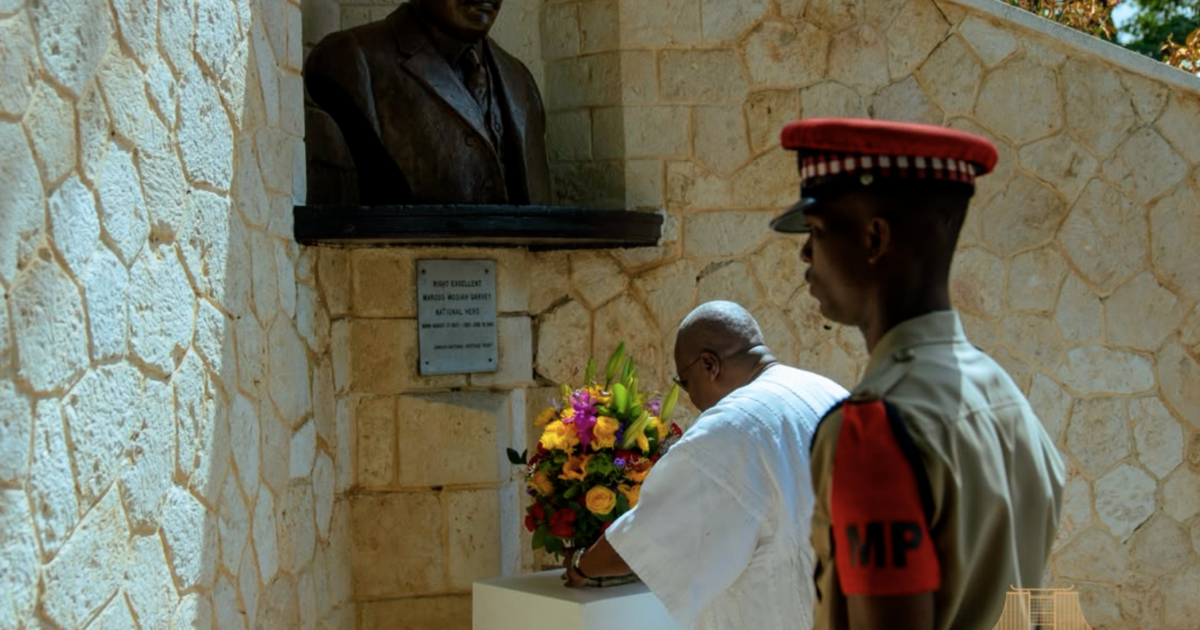
- President John Mahama paid tribute to Marcus Mosiah Garvey at the National Heroes Circle in Kingston, Jamaica.
- The visit recognizes shared Pan-African heritage and Garvey's enduring legacy.
- Garvey's philosophy of Black pride, self-determination, and African unity continues to influence global Pan-African movement.
President John Mahama, on the third day of his five-day state visit to Jamaica, honored the legacy of Pan-African icon Marcus Mosiah Garvey at the National Heroes Circle in Kingston. The visit, which recognizes shared Pan-African heritage and the enduring legacy of Garvey's philosophy, underscores the significance of his contributions to the global Pan-African movement.
Garvey, a Jamaican-born civil rights activist, founded the Universal Negro Improvement Association (UNIA) in 1914, advocating for Black pride, self-determination, and African unity. His ideas have had a profound impact on the lives of Africans and people of African descent worldwide, inspiring generations to reclaim their heritage and work towards unity and empowerment. Background & Context
President Mahama's visit to Jamaica is part of a broader effort to strengthen ties between Ghana and the Caribbean region. The trip, which is his first official visit to the island nation, is seen as an opportunity to explore areas of cooperation and collaboration in areas such as trade, education, and culture.
The visit is also significant in the context of Ghana's role in promoting Pan-Africanism. Ghana, under the leadership of President Nkrumah, played a key role in the Pan-African movement in the 1950s and 1960s, hosting the first All-African People's Conference in 1958. Today, Ghana continues to be a champion of Pan-Africanism, working to promote unity and cooperation among African nations.
Key Findings
The visit highlights the enduring legacy of Garvey's philosophy, which continues to inspire Africans and people of African descent worldwide. Garvey's ideas on Black pride, self-determination, and African unity have had a profound impact on the lives of millions, shaping the course of African history and identity.
The visit also underscores the importance of Jamaica's role in the Pan-African movement. Jamaica, as a Caribbean nation with a significant African population, has played a key role in promoting Pan-Africanism and Garvey's legacy. The visit is seen as an opportunity to strengthen ties between Ghana and Jamaica, working together to promote unity and cooperation among African nations.
Broad Implications
The visit has implications for Ghana's role in promoting Pan-Africanism and unity among African nations. Ghana's efforts to strengthen ties with the Caribbean region, particularly Jamaica, are seen as a key step in promoting unity and cooperation among African nations.
The visit also highlights the importance of Garvey's legacy in the context of contemporary African politics and identity. Garvey's ideas on Black pride, self-determination, and African unity continue to inspire Africans and people of African descent worldwide, shaping the course of African history and identity. Looking Ahead
The visit marks a significant step in Ghana's efforts to promote Pan-Africanism and unity among African nations. Ghana's commitment to strengthening ties with the Caribbean region, particularly Jamaica, is seen as a key step in promoting unity and cooperation among African nations.
The visit also underscores the importance of Garvey's legacy in the context of contemporary African politics and identity. Garvey's ideas on Black pride, self-determination, and African unity continue to inspire Africans and people of African descent worldwide, shaping the course of African history and identity.




0 Comments
Leave a Comment
No comments yet. Be the first to share your thoughts!