Key Takeaways
- Samia Nkrumah rejects claims that all Ghanaians celebrated the 1966 overthrow of her father.
- She highlights the destruction of his statue as a symbolic act, not a reflection of nationwide sentiment.
- New monuments, such as the Sunyani roundabout statue, signal a resurgence of interest in Kwame Nkrumah’s ideas.
- The Nkrumah family aims to present a nuanced legacy for younger generations.
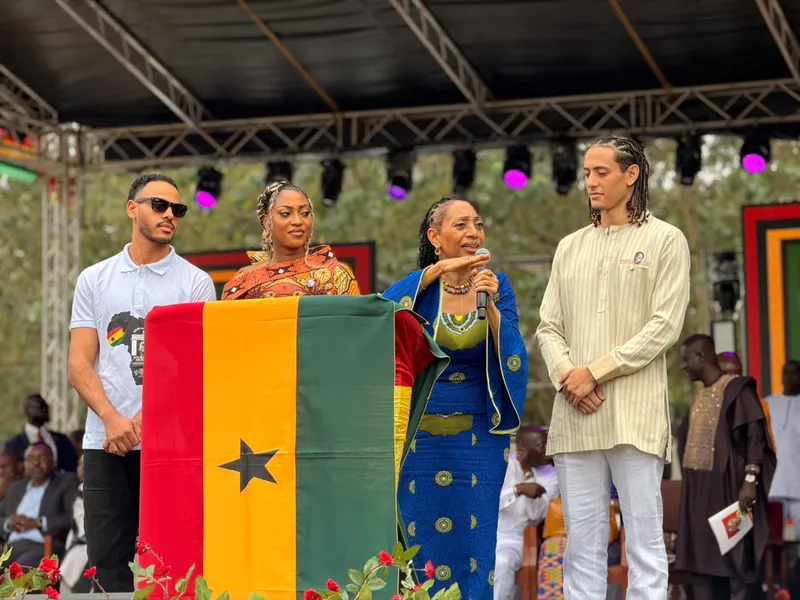
Addressing attendees at the 2026 NkrumahFest in Nkroful, Samia Yaba Nkrumah disputed prevailing narratives that portray the 1966 coup as a universally welcomed event. She emphasized that isolated acts of vandalism and celebratory gatherings cannot be extrapolated to represent the collective mood of the nation.
The daughter of Ghana’s first president also used the platform to underscore the enduring relevance of Kwame Nkrumah’s nationalist and Pan‑African vision, arguing that contemporary commemorations should focus on ideas rather than stone.
Historical Context and the 1966 Coup
The 1966 military intervention that ousted Osagyefo Dr Kwame Nkrumah ended a decade of ambitious industrialization, non‑aligned foreign policy, and continental solidarity initiatives. While the immediate aftermath saw public displays of dissent, including the toppling of the Accra memorial statue, scholars note that Ghanaian society was deeply divided along political, regional, and class lines.
Academic assessments reveal that opposition to Nkrumah’s one‑party state coexisted with substantial support for his anti‑colonial stance and infrastructural projects. The binary portrayal of a uniformly jubilant populace simplifies a complex historical moment.
Reassessing Symbolic Acts
Samia Nkrumah pointed to the severed head of the original statue as a potent metaphor for attempts to erase a contested legacy. She argued that such acts, while dramatic, represent a narrow segment of political expression rather than a national consensus.
The recent unveiling of a new statue at a Sunyani roundabout illustrates a shift toward commemorating Nkrumah’s ideological contributions. The monument’s placement in a public thoroughfare invites everyday interaction, reinforcing the notion that symbols serve as conduits for ideas of confidence, strength, and freedom.
Broader Implications for Ghanaian Identity
By contesting the “isolationist” label often attached to Nkrumah, Samia highlighted his extensive diplomatic outreach, including alliances with Egypt, Yugoslavia, and the Non‑Aligned Movement. This perspective aligns with a growing scholarly reassessment that situates Ghanaian nationalism within a broader Pan‑African framework.
The Nkrumah family’s involvement in NkrumahFest reflects a strategic effort to provide younger Ghanaians with access to primary sources and balanced historiography. Such initiatives aim to counteract what she described as “negative propaganda” and to foster critical engagement with the nation’s founding narratives.
Looking Ahead
Future commemorations are likely to emphasize educational programs that contextualize Nkrumah’s policies within both their successes and shortcomings. By foregrounding nuanced analysis, Ghana can cultivate a collective memory that supports informed civic discourse.
The ongoing dialogue around monuments, curricula, and public memory suggests that Ghana’s engagement with its post‑colonial heritage will remain a dynamic element of its democratic evolution.
0 Comments
Leave a Comment
No comments yet. Be the first to share your thoughts!