
Key Takeaways
- World Bank identifies road and rail deficits as primary drag on Ghana’s economic competitiveness.
- Fragmented institutional oversight hampers coordinated transport planning and maintenance.
- Six priority reforms—including a Road Maintenance Trust Fund and freight‑focused rail revival—are earmarked for the $500 million Market Access and Connectivity Project.
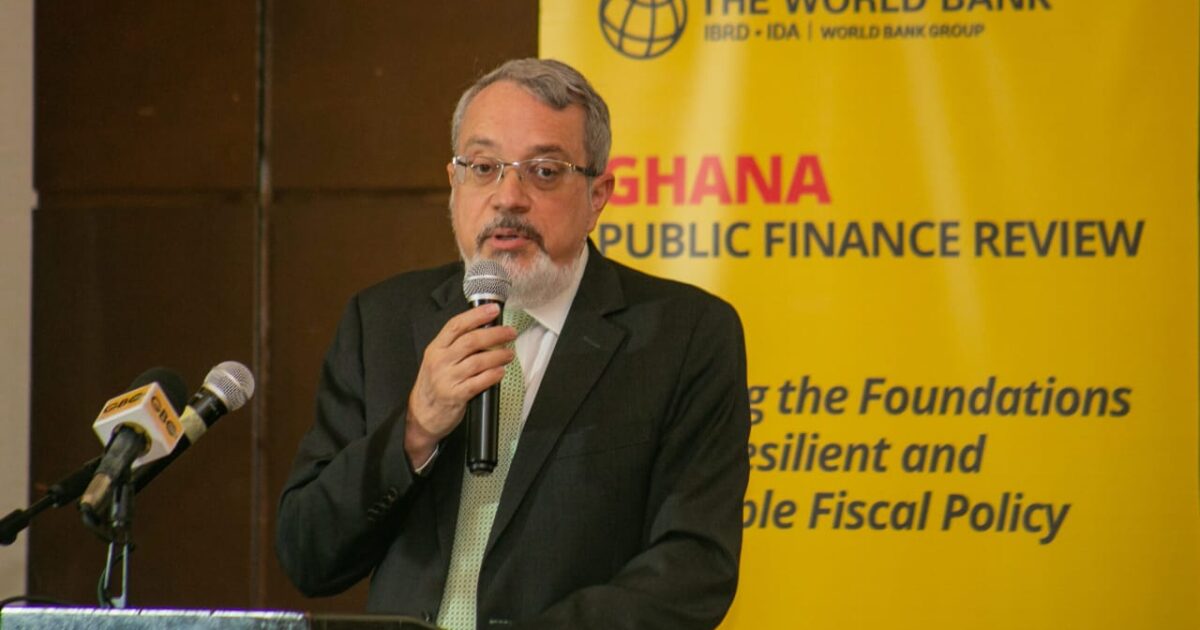
At the launch of the World Bank’s Tenth Ghana Economic Update in Accra, Division Director Robert R. Taliercio warned that the nation’s transport sector is operating far below its potential. He linked inadequate road and rail networks directly to constrained market access, reduced productivity, and stalled job creation.
The assessment places transport infrastructure at the centre of Ghana’s broader economic transformation, arguing that strategic investment and institutional overhaul are essential to unlock growth.
Infrastructure Gaps and Economic Impact
Ghana’s road network spans roughly 94,200 kilometres, yet large segments suffer from chronic under‑maintenance, leading to higher vehicle operating costs and longer travel times. Comparative data from the African Development Bank shows that average road quality indices in West Africa are improving, while Ghana’s scores have stagnated, widening the competitive gap.
The rail system, once a conduit for coastal and inland freight, has contracted dramatically over the past two decades. Historical ridership figures indicate a decline of more than 60 % since the early 2000s, limiting the sector’s ability to alleviate road congestion and to support export‑oriented industries such as cocoa and minerals.
Institutional Fragmentation and Governance
Multiple ministries and agencies share responsibility for transport planning, creating overlapping mandates and delayed decision‑making. Analysts note that the absence of a unified transport authority mirrors challenges faced by neighboring Nigeria, where recent reforms consolidated oversight under a single Ministry of Transportation, yielding measurable efficiency gains.
Taliercio emphasized that without coherent governance, even well‑funded projects risk misallocation. The World Bank’s diagnostic highlights the need for a national transport strategy that aligns budgetary cycles, regulatory standards, and performance monitoring across road, rail, and maritime modes.
World Bank’s Reform Blueprint
The six priority actions propose a mix of financial, regulatory, and technological interventions. Central to the plan is the operationalisation of a Road Maintenance Trust Fund, designed to channel recurring revenues from fuel levies and vehicle registration into a dedicated maintenance pool.
Parallel rail revitalisation targets the western and eastern corridors, aiming to re‑establish freight corridors that connect inland production zones with the ports of Takoradi and Tema. Complementary measures call for climate‑resilient design standards, acknowledging the sector’s vulnerability to extreme rainfall and sea‑level rise.
Digital integration features prominently through the expansion of Ghana’s Single Window system to inland terminals, streamlining customs clearance and reducing logistical bottlenecks for exporters.
Looking Ahead
The $500 million Ghana Market Access and Connectivity Project will finance the rehabilitation of approximately 1,050 kilometres of feeder roads, directly linking rural markets to national trade hubs. Success will depend on parallel reforms that institutionalise maintenance and enforce safety standards, turning infrastructure spending into sustainable assets.
If Ghana adopts the proposed framework, the transport sector could evolve from a growth constraint into a catalyst for regional integration, enhancing the country’s position within the Economic Community of West African States and attracting private investment in logistics and manufacturing.




0 Comments
Leave a Comment
No comments yet. Be the first to share your thoughts!