
Key Takeaways
- The Minority Leader in Parliament, Alexander Afenyo-Markin, has criticized the government's economic management, accusing the Finance Minister of failing to address the concerns of ordinary Ghanaians.
- Afenyo-Markin questioned the government's spending priorities, handling of key sectors, and lack of meaningful relief for citizens facing economic difficulties.
- He challenged the Finance Minister's presentation, arguing that the true measure of a Finance Minister should be based on the impact of government policies on the lives of Ghanaians.
- Afenyo-Markin also raised concerns about inconsistencies in government figures regarding funds released for certain programmes.
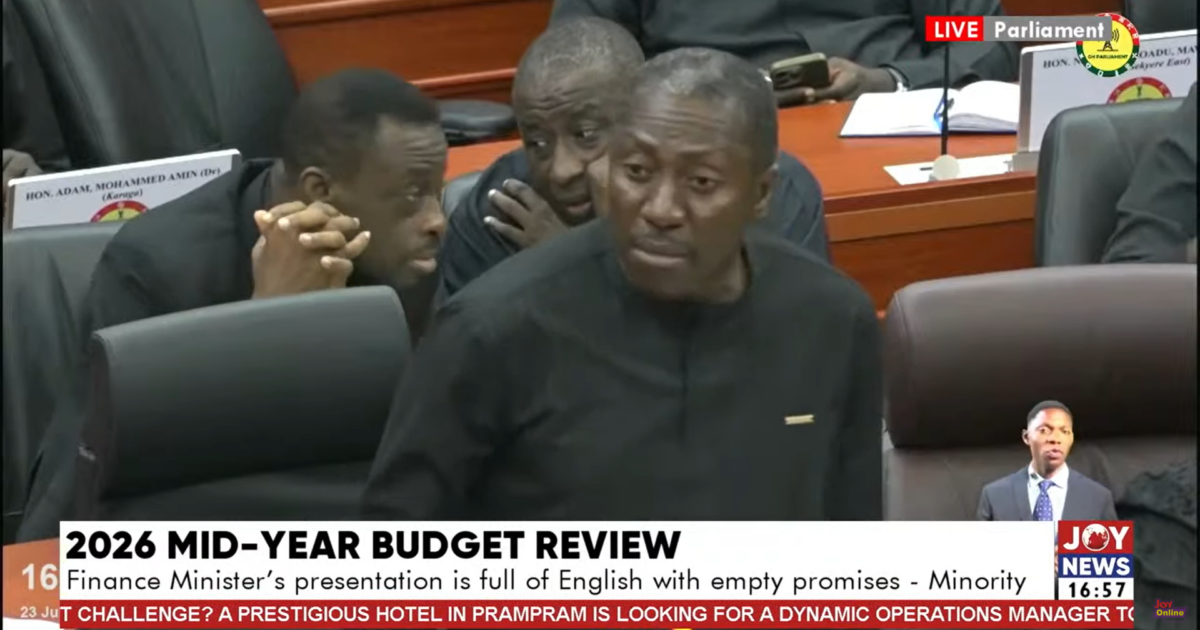
Parliamentary proceedings on Thursday, July 23, saw a heated exchange between the Minority Leader, Alexander Afenyo-Markin, and the Finance Minister, Dr Cassiel Ato Forson, over the government's economic management.
Afenyo-Markin's critique centered on the government's lack of concrete policy measures to address the economic challenges facing citizens. He argued that the government's claims of prudent economic management were unfounded, citing significant financial losses incurred under the gold-for-reserves initiative.
Background & Context
The gold-for-reserves policy, which aims to swap gold for foreign exchange reserves, has been plagued by controversy since its introduction. Critics have argued that the policy has resulted in significant financial losses for the government, leading to increased costs for businesses and citizens.
Afenyo-Markin's concerns about the policy's impact on the economy are not new. In 2022, the Minority Leader had raised similar concerns, warning that the policy would lead to financial losses and undermine economic stability.
Key Findings
Afenyo-Markin's critique of the government's economic management highlights several key findings. Firstly, he argued that the government's spending priorities were misplaced, with a focus on market expansion projects rather than addressing pressing healthcare needs.
Secondly, he questioned the government's handling of key sectors, including agriculture and cocoa production. Afenyo-Markin criticized the government for neglecting the cocoa sector, which he argued was critical to the country's economic stability.
Broader Implications
Afenyo-Markin's critique has broader implications for the government's economic management. His concerns about the gold-for-reserves policy and the government's spending priorities highlight the need for a more nuanced approach to economic management.
The Minority Leader's emphasis on the need for concrete policy measures to address economic challenges is particularly relevant. In a country where many citizens are struggling to make ends meet, the government's economic management must prioritize the needs of ordinary Ghanaians.
Looking Ahead
Afenyo-Markin's critique serves as a warning to the government to re-evaluate its economic management. The Minority Leader's emphasis on the need for concrete policy measures and a more nuanced approach to economic management highlights the need for a more responsive and effective government.
As the government continues to grapple with economic challenges, Afenyo-Markin's critique reminds us of the importance of prioritizing the needs of ordinary Ghanaians. Only by doing so can the government ensure a more stable and prosperous economy for all citizens.




0 Comments
Leave a Comment
No comments yet. Be the first to share your thoughts!