
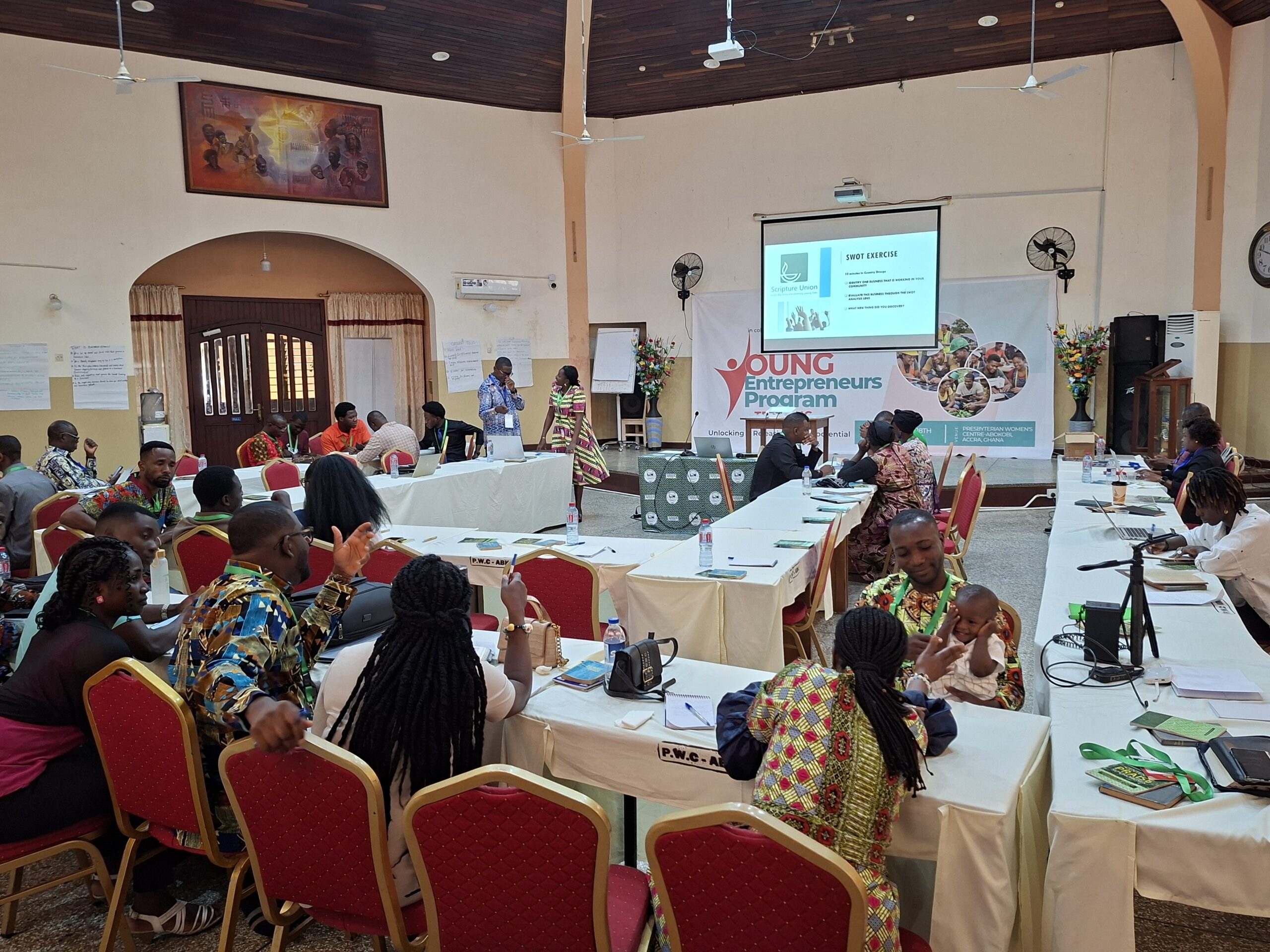
Key Takeaways
- Scripture Union Ghana’s Young Entrepreneurs Programme merges practical business training with biblical ethics.
- The National Youth Authority’s deputy chief executive highlighted the scheme’s role in shaping responsible contributors to Ghana’s economy.
- Targeting rising youth unemployment, the programme seeks to cultivate a generation of ethically grounded entrepreneurs.
The Young Entrepreneurs Programme (YEP) launched by Scripture Union Ghana represents a strategic response to the continent’s mounting joblessness among young adults. By embedding moral instruction within commercial curricula, the initiative aspires to produce business leaders who prioritize integrity as much as profit.
National Youth Authority officials, including Deputy Chief Executive Jacob Adongo Atule, endorsed the effort as a bridge between skill acquisition and the nation’s broader development agenda, emphasizing the importance of a values‑based entrepreneurial mindset.
Background & Context
Ghana’s youth unemployment rate has hovered above 20 percent for several years, prompting civil society and government agencies to explore alternative pathways to economic participation. Faith‑based groups have historically contributed to social services, yet few have ventured into structured business education.
Scripture Union Ghana, an organization rooted in Christian outreach, identified this gap and leveraged its network of churches and schools to design a curriculum that addresses both market demands and ethical considerations.
Program Design and Partnerships
The YEP curriculum blends classroom instruction on financial planning, marketing, and digital tools with workshops on biblical stewardship, servant leadership, and ethical decision‑making. Trainers such as Nancy Kahodia, a project management specialist, coordinate sessions that align entrepreneurial theory with scriptural principles.
Collaboration with the National Youth Authority provides logistical support, access to training venues, and a pipeline for participants to transition into internships or micro‑enterprise grants. This public‑private partnership amplifies the programme’s scalability across urban and peri‑urban communities.
Impact and Early Outcomes
Since its pilot phase, YEP has enrolled over 150 young adults, many of whom report increased confidence in drafting business plans and navigating regulatory environments. Preliminary surveys indicate a shift in participants’ perception of profit as a tool for societal benefit rather than personal gain.
Stakeholders note that the integration of faith‑based ethics reduces instances of fraudulent practices commonly observed in informal sectors, thereby fostering a more trustworthy commercial ecosystem.
Looking Ahead
Program architects aim to expand YEP to additional regions, incorporating mentorship from established Ghanaian entrepreneurs and securing seed funding for graduates. Long‑term metrics will track job creation, business survival rates, and community impact to assess the model’s efficacy.
Should the initiative demonstrate sustained success, it could serve as a blueprint for similar faith‑aligned entrepreneurship programs throughout West Africa.






0 Comments
Leave a Comment
No comments yet. Be the first to share your thoughts!