
Key Takeaways
- Ghana prioritizes four key actions to achieve the New Urban Agenda, including affordable and inclusive housing, integrated urban development, urban infrastructure, and local economic development.
- The country aims to strengthen urban governance, institutional capacity, and data systems, and to advance climate-resilient and environmentally sustainable cities.
- Ghana faces a housing deficit of over 1.8 million units, with up to 37 percent of the urban population living in informal settlements.
- The Deputy Minister calls for increased and predictable financing for housing and urban development, direct access to climate finance for cities, and expanded technical and multilateral collaboration.
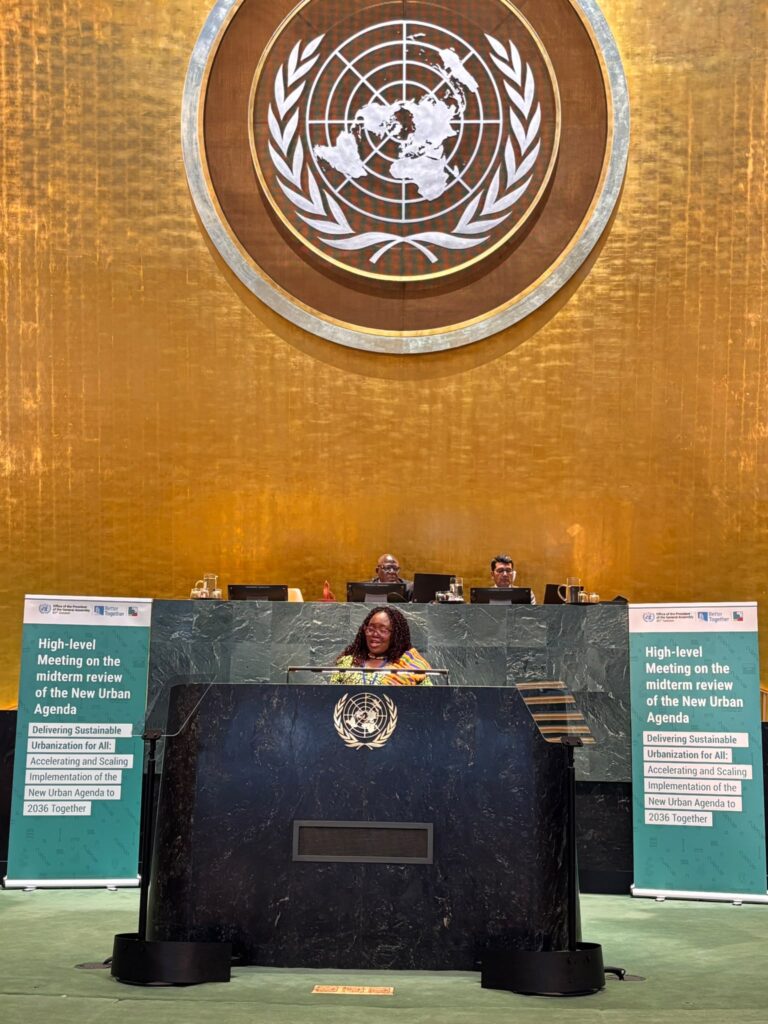
The Deputy Minister of Local Government, Chieftaincy and Religious Affairs, Rita Naa Odolley Sowah, has reaffirmed Ghana's commitment to accelerating the delivery of the New Urban Agenda. The agenda, adopted by the United Nations in 2016, represents a shared vision for a better and more sustainable future.
At the United Nations General Assembly High-Level Political Forum in New York, the Deputy Minister outlined four key priority areas for Ghana: scaling affordable and inclusive housing, strengthening integrated urban development and spatial planning, expanding urban infrastructure and local economic development, and advancing climate-resilient and environmentally sustainable cities.
Background & Context
The New Urban Agenda was adopted at the United Nations Conference on Housing and Sustainable Urban Development (Habitat III) in Quito, Ecuador, in 2016. The agenda represents a shared vision for a better and more sustainable future, emphasizing the importance of well-planned and well-managed urbanization for sustainable development.
Ghana has made significant progress in the past decade through strong national leadership, decentralized governance, and evidence-based planning. However, the country still faces a housing deficit of over 1.8 million units, with up to 37 percent of the urban population living in informal settlements.
Key Findings
The Deputy Minister highlighted Ghana's progress in strengthening urban governance, economic productivity, and institutional performance through digital systems, skills development, and private sector participation. However, she acknowledged that progress has not kept pace with rapid urbanization, and that housing remains the most pressing challenge.
The Deputy Minister emphasized the importance of international cooperation in addressing the challenges of urbanization. She called for increased and predictable financing for housing and urban development, direct access to climate finance for cities, and expanded technical and multilateral collaboration.
Broader Implications
The New Urban Agenda has significant implications for sustainable development in both developing and developed countries. If well-planned and well-managed, urbanization can be a powerful tool for sustainable development, providing opportunities for economic growth, social inclusion, and environmental sustainability.
The Deputy Minister's call for increased international cooperation and financing highlights the importance of global partnerships in addressing the challenges of urbanization. The success of the New Urban Agenda will depend on the ability of countries to work together to address these challenges.
Looking Ahead
Ghana's commitment to accelerating the New Urban Agenda is a positive step towards achieving sustainable development. The Deputy Minister's emphasis on affordable and inclusive housing, integrated urban development, and climate-resilient and environmentally sustainable cities is consistent with the principles of the agenda.
The success of Ghana's efforts will depend on the ability of the country to implement these priorities effectively, and to engage in international cooperation to address the challenges of urbanization. The Deputy Minister's call for increased financing and technical collaboration highlights the importance of global partnerships in achieving the goals of the New Urban Agenda.




0 Comments
Leave a Comment
No comments yet. Be the first to share your thoughts!