

Key Takeaways
- The Ghana Gold Board (GoldBod) has disputed claims of a $1.7 billion loss, citing the International Monetary Fund's (IMF) 2026 Article IV Consultation report on Ghana.
- Associate Professor of Development Economics at the University of Ghana, Prof Ebo Turkson, explained that the figure relates to losses incurred by the Bank of Ghana through its Domestic Gold Purchase Programme.
- GoldBod itself is not operating at a loss, with the distinction being crucial in understanding the true extent of the programme's impact.
- The Domestic Gold Purchase Programme has delivered significant economic benefits, including the accumulation of gold reserves and support for foreign exchange market interventions.
The Ghana Gold Board (GoldBod) has pushed back against claims of a $1.7 billion loss, citing the International Monetary Fund's (IMF) 2026 Article IV Consultation report on Ghana. According to the report, the significant scaling-up of the Domestic Gold Purchase Programme in 2025 resulted in losses of more than $1.7 billion, equivalent to about 1.5% of Ghana's GDP.
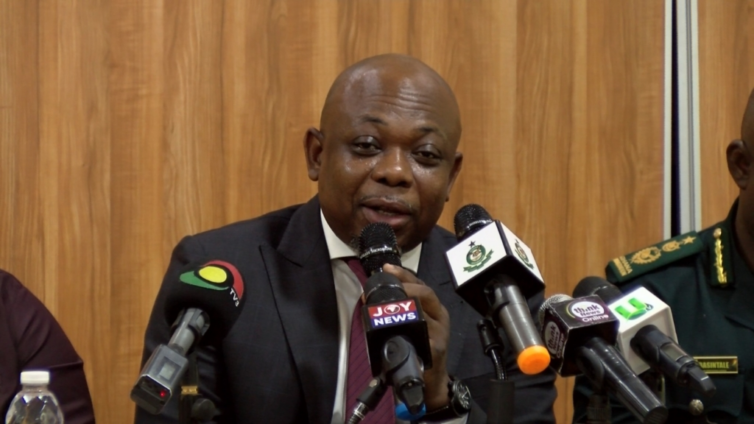
Speaking on JoyNews' Newsfile on Saturday, August 15, Associate Professor of Development Economics at the University of Ghana, Prof Ebo Turkson, said the figure should not be attributed to GoldBod as an entity. He emphasized that the distinction was crucial in understanding the true extent of the programme's impact.
Background & Context
The Domestic Gold Purchase Programme was an economic policy intervention designed to help Ghana build its reserve buffers with gold while reducing incentives for the smuggling of artisanal and small-scale mining gold. The programme involves GoldBod purchasing gold at prices close to international market rates, with the Bank of Ghana recording the value of the gold using its own exchange rate for accounting purposes.
The difference between the two rates creates a translation cost that is borne by the central bank, which is reflected in the IMF's reported figure. This cost is not a direct loss incurred by GoldBod, but rather a consequence of the programme's design.
Key Findings
Prof Turkson highlighted the programme's economic benefits, including the accumulation of gold reserves and support for foreign exchange market interventions. He noted that GoldBod added almost 40 tonnes of gold, valued at nearly $4 billion, to Ghana's reserves in its first year.
The stronger cedi subsequently helped reduce Ghana's debt-to-GDP ratio from about 68% to 45% and generated savings of nearly $7 billion on external debt servicing. This, in turn, contributed to the decline in inflation, with the appreciation of the cedi helping bring inflation down to 9.5% at the end of 2025.
Broader Implications
The controversy surrounding the Domestic Gold Purchase Programme underscores the complexities of economic policy-making. As Prof Turkson emphasized, it is essential to consider both the costs and benefits of such interventions when assessing their impact on the economy.
The programme's benefits, including the accumulation of gold reserves and support for foreign exchange market interventions, should be taken into account when evaluating its effectiveness. This holistic approach will provide a more accurate understanding of the programme's impact and inform future policy decisions.
Looking Ahead
As Ghana looks to strengthen its economy and build reserves, the Domestic Gold Purchase Programme will likely remain a key component of the country's economic strategy. The programme's benefits, including the accumulation of gold reserves and support for foreign exchange market interventions, will continue to be essential in sustaining economic stability and resilience.



0 Comments
Leave a Comment
No comments yet. Be the first to share your thoughts!