
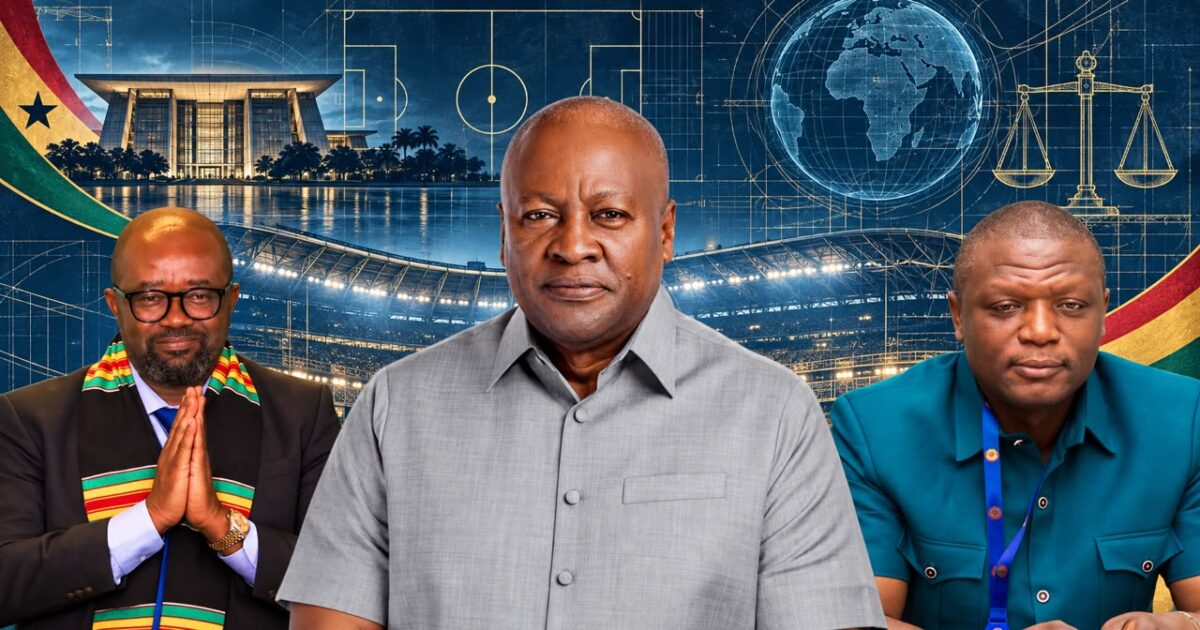
One day after the Black Stars' head coach Carlos Queiroz resigned, Ghana's Minister of Youth and Sports convened a meeting with the Ghana Football Association (GFA) and delivered seven directives aimed at restructuring the federation's technical and management bodies.
Key directives
The minister ordered the dissolution of the existing technical team and the national team management committees. In their place, separate men’s and women’s committees will be formed. A five‑member panel will be tasked with assisting the search for a new head coach, and the GFA will not be permitted to appoint a successor unilaterally.
Governance context
The directives follow longstanding concerns about financial and administrative oversight in Ghanaian football. The Dzamefe Commission, established after the 2014 World Cup, reported that US$4 million in cash was sent to the tournament, of which US$122,500 was unaccounted for. Additional irregularities included GH₵189,000 in unexplained catering expenses, US$75,150 in unused match‑ticket revenue, a US$900,000 shortfall between expected and received World Cup prize money, and US$577,500 in management appearance fees paid to seven committee members despite only five officials traveling to Brazil.
A government White Paper later endorsed a reform architecture that called for a Public Interest Committee with a government‑appointed chair, a separate, publicly audited bank account for national‑team sponsorship funds, performance contracts for management committees, a ban on cash transfers to tournaments, and enforcement of FIFA’s Standard Cooperation Agreement. The 2025 GFA Statutes, however, do not incorporate these recommendations.
The current Executive Council comprises twelve seats: the President, five Premier League representatives, three Division One representatives, one Women’s Premier League representative, and two regional FA chairpersons. All members must have held an active role in the GFA or a member body within the past two of the last five years, effectively excluding independent outsiders. The GFA’s Congress, which can amend statutes, consists of 124 delegates, 92 of whom (approximately 74%) are club representatives. Amendments require a three‑quarter majority of delegates present, giving clubs decisive voting power. Only members and the Executive Council may table proposals, limiting external influence.
Additional structural features include the Executive Council's authority to nominate members of supposedly independent committees, a requirement that the Referees Committee chair be an Executive Council member, integrity checks applied solely to the President, and an Article 73 provision that declares the GFA owns all competition rights.
Internationally, the English FA has restructured its board to include independent directors after the 2023 fan‑led review, and the UK Parliament passed the Football Governance Act 2025 establishing an Independent Football Regulator. Spain’s Law 39/2022 and Portugal’s 2011 federation statutes provide further examples of state‑supervised governance models.
In 2018, following the “Number 12” scandal, Ghana’s government sought a court‑ordered dissolution of the GFA, prompting a FIFA warning against interference and the appointment of a normalization committee to run the federation.
Authorities have not disclosed a timeline for implementing the seven directives or for any further legislative changes.
0 Comments
Leave a Comment
No comments yet. Be the first to share your thoughts!