
Key Takeaways
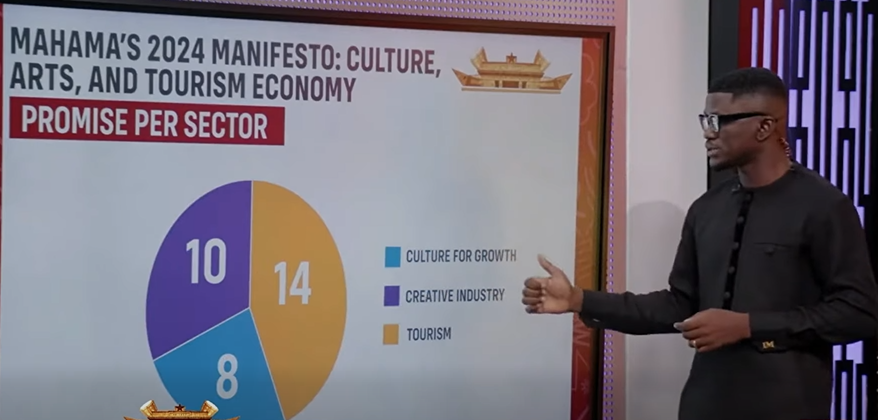
- The Ghanaian government allocates a mere 0.084% of its overall expenditure to the creative industry.
- The sector is projected to generate approximately $5 billion annually, ranking it as the country's second or third largest foreign exchange earner.
- Despite its potential, the industry faces significant underfunding, hindering its growth and development.
- Experts emphasize the need for increased government investment in the creative sector to unlock its full potential.
Ghana's creative industry, encompassing sectors such as tourism, culture, and arts, has long been touted as a potential engine for economic growth. However, a recent analysis by JoyNews Research reveals that the government's allocation to this sector is woefully inadequate.
According to Isaac Kofi Agyei, Head of Research at JoyNews, the government devotes a mere 0.084% of its overall expenditure to the creative industry. This paltry allocation is particularly striking given the sector's projected annual revenue of approximately $5 billion, making it Ghana's second or third largest foreign exchange earner.
Background & Context
The creative industry's potential for economic growth has been acknowledged by various stakeholders, including government officials and industry experts. However, the sector's underfunding has hindered its development, leading to a lack of investment in infrastructure, human capital, and innovation.
A key challenge facing the industry is the limited availability of resources, which hampers the creation of jobs, stimulates economic growth, and promotes cultural exchange. The industry's underfunding also limits its ability to compete globally, as more developed countries invest heavily in their creative sectors.
Key Findings
The JoyNews Research analysis highlights the stark contrast between the government's allocation to the creative industry and its potential. The sector's underfunding is particularly concerning given its projected revenue and the potential benefits it could bring to the economy.
The analysis also underscores the need for increased government investment in the creative sector. Experts emphasize that a more significant allocation of resources would enable the industry to unlock its full potential, drive economic growth, and create jobs.
Broader Implications
The creative industry's underfunding has broader implications for Ghana's economy and society. A lack of investment in the sector limits the country's ability to compete globally, potentially hindering its economic growth and development.
The underfunding of the creative industry also has social implications, as it reduces the sector's ability to promote cultural exchange, stimulate innovation, and create jobs. This, in turn, can lead to a lack of engagement and participation in the creative sector, perpetuating the cycle of underfunding.
Looking Ahead
To unlock the creative industry's full potential, the government must increase its allocation to the sector. Experts emphasize the need for a more strategic approach to investing in the creative industry, one that targets specific areas such as infrastructure development, human capital, and innovation.
A more significant allocation of resources would enable the industry to drive economic growth, create jobs, and promote cultural exchange. Ultimately, the government's commitment to investing in the creative sector will determine the industry's ability to reach its full potential and contribute to Ghana's economic growth and development.

0 Comments
Leave a Comment
No comments yet. Be the first to share your thoughts!